India’s Journey Since Independence – AI and Automation Driving the New Growth Wave
Introduction
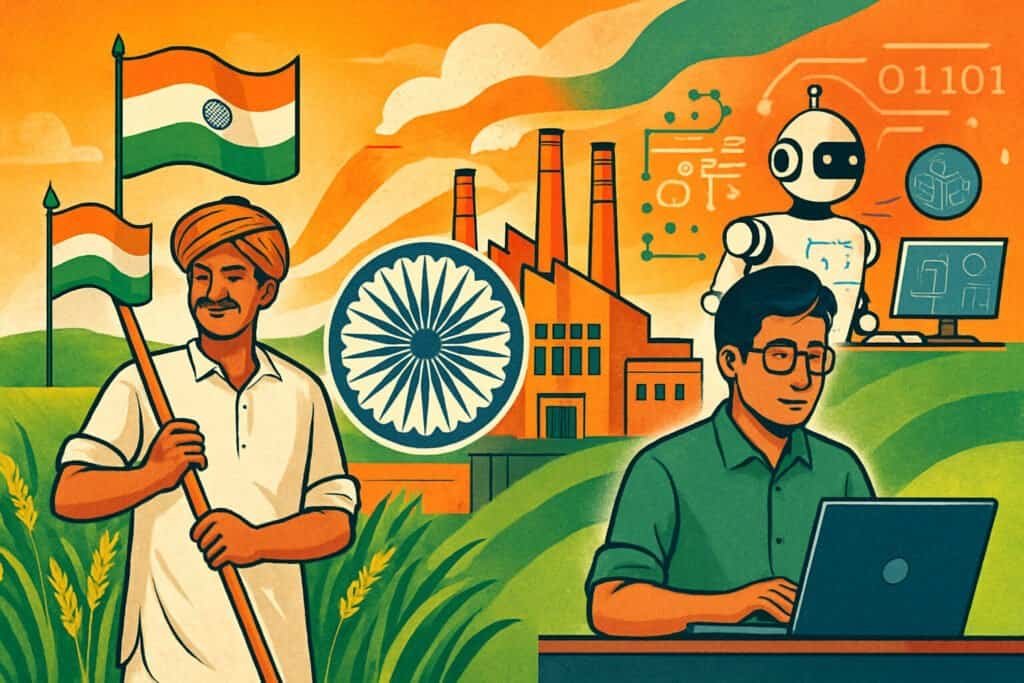
India’s story since independence on August 15, 1947, is a testament to resilience, reform, and innovation. From a poor, struggling country, India is now the world’s fourth-largest economy, with a GDP of $4.19 trillion in 2025. As we celebrate this milestone, a new chapter is rapidly unfolding—artificial intelligence (AI) and automation are transforming India’s economic future.
The Evolution of Growth
- 1947-1991: India was an agrarian, underdeveloped economy dealing with poverty, low industrial output, and limited infrastructure. The mixed socialist model, five-year plans, and emphasis on heavy industry laid the groundwork for nation-building.
- Post-1991 Liberalization: Economic reforms opened doors to global markets and ignited sectors like IT, services, and manufacturing. Rapid urbanization, tech adoption, and policy reforms made India one of the fastest-growing economies globally.
- 2025 Onwards: India holds the fourth spot worldwide in nominal GDP, surpassing Japan. The nation now aims for tech-led growth, with AI playing a key role in bridging productivity and innovation gaps.
AI and Automation: Accelerants of Change
AI-driven automation has begun shaping every sector:
- Manufacturing: Advanced robotics and process automation are elevating industrial productivity, bridging legacy gaps.
- Agriculture: AI-powered precision farming boosts yields and reduces costs through sensors, drones, and predictive analytics.
- Healthcare: AI tools enable better diagnostics and address doctor shortages, especially in rural regions.
- Services & IT: India’s IT giants lead the AI revolution, offering cloud, cybersecurity, and generative AI solutions to global clients.
A World Economic Forum study forecasts AI could add $957 billion to India’s economy by 2035, generate 40 million new jobs by 2030, and push the country closer to its $5 trillion GDP target.
Pros of AI Automation in India
- Productivity Boost: AI optimizes manufacturing, farming, and logistics, ensuring efficient resource usage.
- Innovation & Entrepreneurship: Hundreds of AI startups boost India’s global competitiveness, like Niramai’s breast cancer detection and Microsoft’s AI-enabled farmer platform.
- 24/7 Availability: AI systems and chatbots provide uninterrupted support, customer service, and analytics.
- Data-Driven Decisions: AI enables faster, more accurate decision-making in business and governance.
- Scalability: AI allows easy expansion and process scaling for enterprises and public services.
Cons of AI Automation
- Job Displacement: Automation could affect up to 23% of Indian jobs by 2030, especially for routine and unskilled roles. Over 100 million workers, mostly informal, are at risk.
- Skill Gap: 60% of India’s workforce lacks digital literacy, limiting access to AI-driven opportunities. Rural and marginalized communities face greater exclusion.
- Ethical & Privacy Concerns: AI may reinforce biases, threaten data privacy, and raise surveillance risks if not regulated properly.
- Environmental Impact: Training large AI models consumes significant energy, potentially impacting sustainability.
- Overdependence & Security Risks: Businesses may become too reliant on AI, risking catastrophic failures or exploitation by hackers.
Conclusion
India’s transformation since independence is remarkable—but the next leap will be digital. AI and automation promise unprecedented opportunities for productivity, innovation, and global leadership. However, realizing their full benefits requires thoughtful policy, inclusive skill development, and robust ethical safeguards.
India’s growth story now depends on harnessing AI for good—ensuring technology empowers every citizen and builds a prosperous, equitable future.