Workflow Automation Small Business: A Comprehensive Guide to Streamlining Your Operations
Workflow Automation Small Business: A Comprehensive Guide to Streamlining Your Operations
Estimated reading time: X minutes
Key Takeaways
- workflow automation is a game-changer. Simply put, it’s using technology to handle routine tasks automatically, freeing up your time and energy for what really matters.
- it’s not just for big corporations anymore. Small businesses are increasingly embracing workflow automation to level the playing field and punch above their weight.
- it’s not about replacing people with robots. It’s about freeing your team from mind-numbing busywork so they can focus on what humans do best – building relationships, solving complex problems, and driving growth.
Table of contents
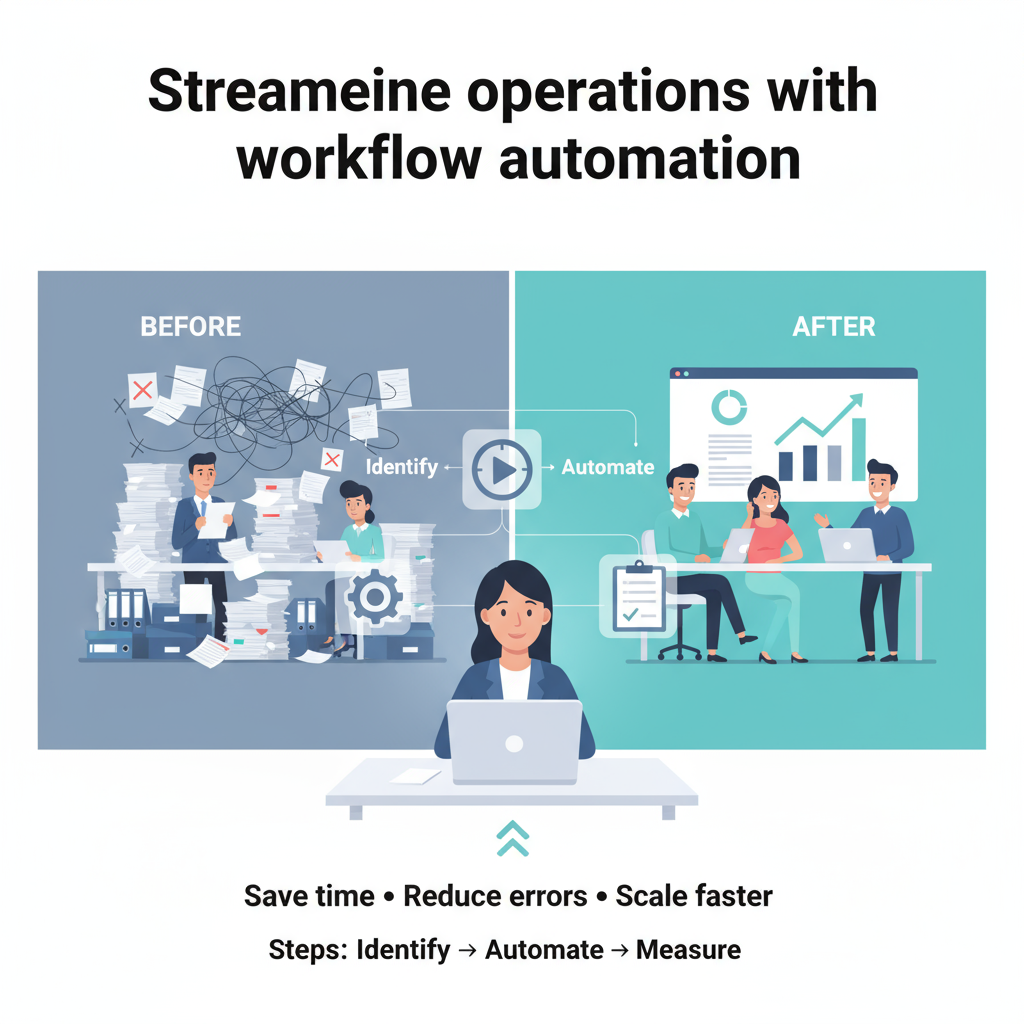
Picture this: You’re a small business owner, and your desk is buried under stacks of paperwork. Your inbox is overflowing, and you’re spending hours on repetitive tasks instead of growing your business. Sound familiar? What if I told you there’s a better way?
I’ve spent years helping small businesses transform their operations, and I can tell you that workflow automation is a game-changer. Simply put, it’s using technology to handle routine tasks automatically, freeing up your time and energy for what really matters. And here’s the thing – it’s not just for big corporations anymore. Small businesses are increasingly embracing workflow automation to level the playing field and punch above their weight.
For a broader overview, see Introduction to Business Automation.
Let’s dive into how you can use workflow automation to transform your small business operations. I’ll share practical examples, real benefits, and simple steps to get started – no technical degree required.
Understanding Workflow Automation: What’s All the Buzz About?
Think of workflow automation as having a tireless digital assistant who works 24/7, never makes mistakes, and never needs a coffee break. It’s basically software that takes those repetitive tasks you hate – like data entry, sending follow-up emails, or processing invoices – and handles them automatically.
But here’s what really matters: it’s not about replacing people with robots. It’s about freeing your team from mind-numbing busywork so they can focus on what humans do best – building relationships, solving complex problems, and driving growth.
The technology behind this might sound complicated, but it’s actually pretty straightforward. Modern cloud-based tools can connect your existing apps and trigger automatic actions based on simple “if this, then that” rules. For example, when a customer fills out your contact form, your system could automatically add them to your mailing list, send a welcome email, and notify your sales team – all without anyone lifting a finger.
For practical examples, see Common Processes to Automate in Small Businesses.