Why Your Small Business Needs a Small Business Automation Consultant to Boost Efficiency and Cut Costs
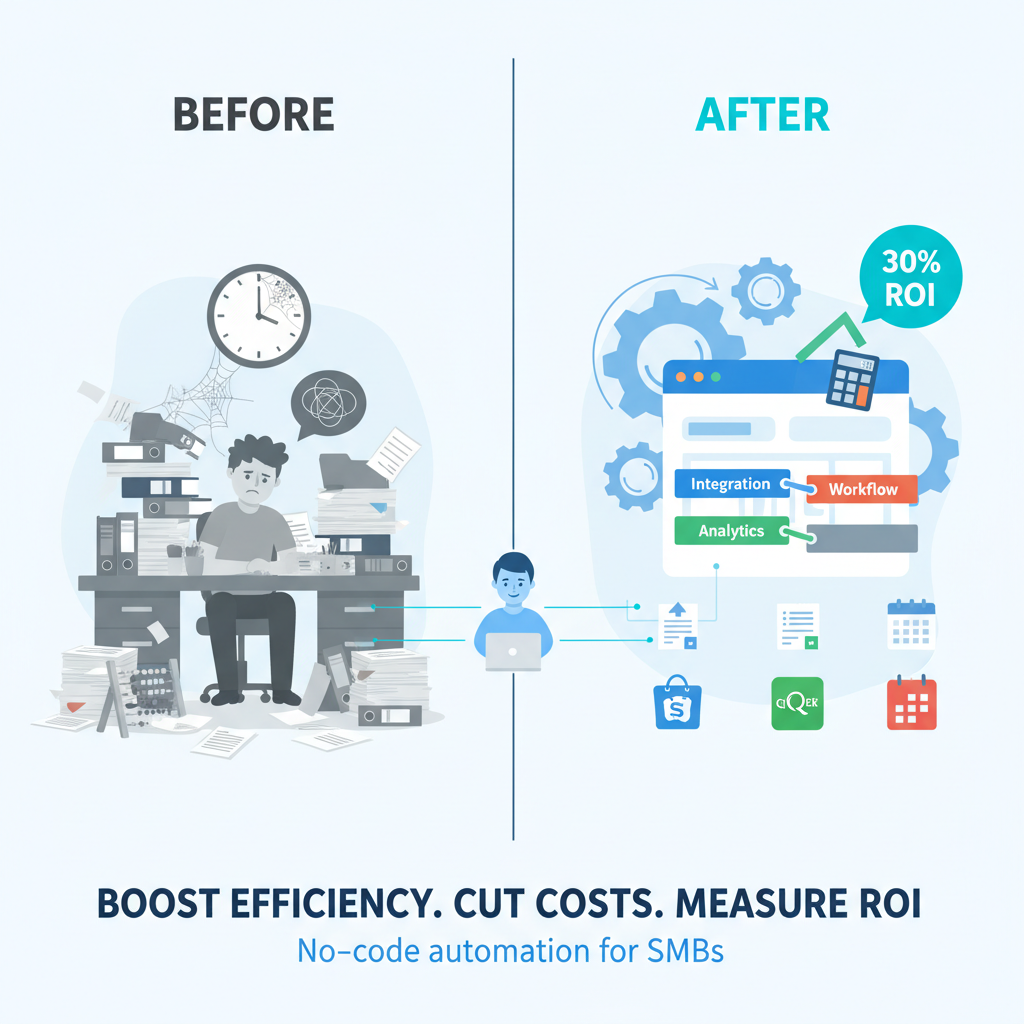
Why Your Small Business Needs a Small Business Automation Consultant to Boost Efficiency and Cut Costs
Estimated reading time: 6 minutes
Key Takeaways
- Automation turns repetitive tasks into reliable, scalable processes that run with little to no manual input
- A small business automation consultant brings industry experience to tailor affordable solutions and avoid costly mistakes
- Cloud-based, no-code/low-code tools make automation accessible for small businesses
- Having a structured starting point helps you plan, budget, and execute an automation project successfully
Table of contents
Let me paint a familiar picture: You’re spending another late night catching up on invoices, manually entering data into spreadsheets, and responding to customer emails that somehow slipped through the cracks during your busy day. Sound familiar? As someone who’s worked with countless small business owners, I’ve seen this scenario play out far too often.
The good news? There’s a better way. Enter the small business automation consultant – your partner in transforming those time-consuming manual tasks into streamlined, automated processes that practically run themselves.
What exactly is business automation? Think of it as using smart technology to handle repetitive tasks that eat up your valuable time. Instead of manually sending follow-up emails to customers or processing invoices one by one, automation tools can do this work for you – consistently and without errors. It’s like having a tireless virtual assistant working 24/7. Learn more about automation basics in Introduction to Business Automation
But here’s where many small business owners get stuck: With so many automation tools and possibilities out there, where do you even start? That’s where a small business automation consultant comes in. They’re specialists who understand both the technology landscape and the unique challenges small businesses face. They can assess your specific needs, recommend affordable solutions, and help implement them in a way that makes sense for your business. If you want a structured starting point, see How to Plan Your First Automation Project
Understanding Business Automation
Here’s a startling statistic that might make you sit up straighter: The average employee could save between 240 and 360 hours annually through automation. That’s like getting back an entire month of work time! But automation isn’t just about saving time – it’s about fundamentally improving how your business operates.
Think of business automation as your business’s operating system. Just as your smartphone handles countless tasks in the background while you focus on what’s important, business automation takes care of repetitive work while you concentrate on growth and strategy. This might include:
- Automatically scheduling appointments and sending reminders
- Processing and reconciling payments
- Generating and sending invoices
- Managing inventory updates
- Handling routine customer service inquiries
The beauty of modern automation is that it’s no longer just for big corporations with massive IT budgets. Today’s cloud-based tools are specifically designed with small businesses in mind, making them both affordable and user-friendly. No-code/Low-Code Automation Tools can help you start quickly: https://anilbohra.me/https-anilbohra-me-no-code-automation-tools-guide-2024/
Why Hire a Small Business Automation Consultant?
“But can’t I just figure this out myself?” I hear this question a lot, and while you certainly could try, here’s why working with a consultant often makes more sense:
First, they bring experience. A good automation consultant has already helped dozens of businesses similar to yours. They know which solutions work best for specific industries and can help you avoid costly mistakes. Think of them as a guide who’s already mapped out the territory you’re about to explore. If you want a broader take on whether to DIY or hire, see DIY vs Hiring an Automation Consultant
Let me share a quick example: I recently worked with a local retail store owner who was spending 15-20 hours weekly on inventory management and reordering. After implementing an automated inventory system recommended by their consultant, that time dropped to just 2-3 hours. The solution paid for itself within months.
What makes automation consultants particularly valuable for small businesses is their ability to:
- Identify the highest-impact opportunities for automation
- Recommend solutions that fit your budget and technical capabilities
- Ensure new systems integrate smoothly with your existing processes
- Train your team effectively
- Provide ongoing support as needed
If you’re wondering about how to start with automation in your business, see Common Processes to Automate in Small Businesses and Automation Use Cases by Industry. For planning and a practical roadmap, check How to Plan Your First Automation Project. Also consider DIY vs Hiring to help decide if you should bring in an expert.
[Continued in next part due to length…]