The Smart Firefighting Revolution: Market Growth and Key Drivers
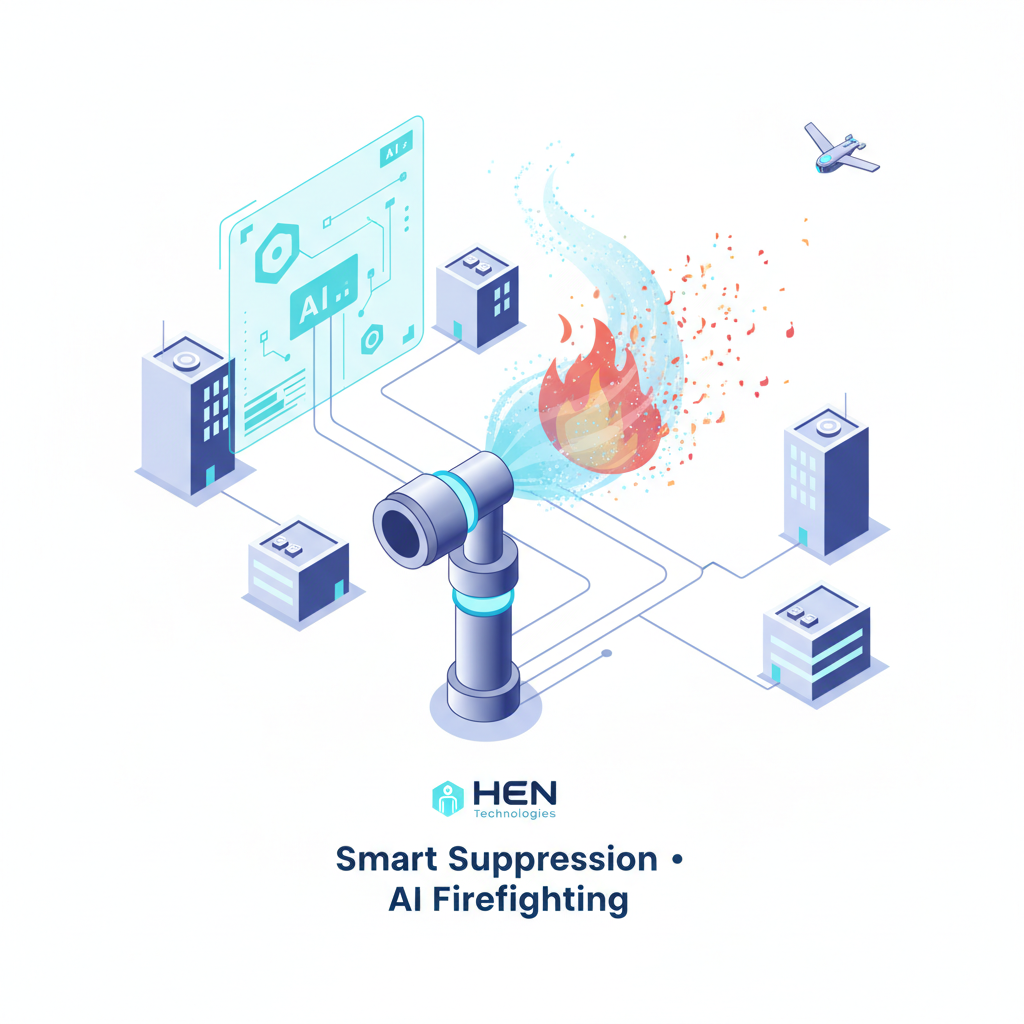
When seconds mean the difference between containment and catastrophe, artificial intelligence is rewriting the rules of firefighting—analyzing threats before flames ignite and guiding responders through smoke-filled buildings with unprecedented precision.
Here’s the thing: traditional fire services are stretched thin. Retirements are outpacing new hires. Response times lag because departments are still using technology from the early 2000s. And wildfires? They’re getting more severe, more unpredictable, and frankly, overwhelming for conventional detection methods.
But AI is changing all of that. I’ve watched this transformation unfold over the past few years, and honestly, it’s remarkable. We’re talking about predictive analytics that spot fire risks before the first spark, drones that map wildfire perimeters in real-time, and smart helmets that help firefighters locate victims through walls of smoke in under ten seconds.
This guide explores how AI technologies are transforming fire safety across wildfire detection, building protection, and emergency response. You’ll discover proven applications, market projections showing $3.23 billion growth by 2033, and actionable strategies for modern fire services. No fluff—just what’s actually working in the field right now.
The Smart Firefighting Revolution: Market Growth and Key Drivers
The global smart firefighting market is exploding. We’re looking at growth to $3.23 billion by 2033, and that’s not just some analyst’s wishful thinking—it’s driven by real, urgent needs [Source: Market Research Reports].
Why the massive growth? Three things are converging at once. First, fire incidents are increasing globally due to climate change and urban expansion. Second, governments are finally investing in modernization after decades of underfunding. And third—this is the big one—IoT sensors and AI algorithms have become affordable enough for municipal budgets.
The market breaks down into three primary segments: forest fire detection, building safety systems, and industrial facility protection. Each segment has different requirements, but they all share one common thread: the need to process massive amounts of data faster than any human could manage.
I’ve seen municipal fire departments that were still using paper logs for equipment checks suddenly implement integrated AI systems that monitor everything from hydrant pressure to apparatus maintenance schedules. It’s like watching departments leap from the 1990s straight into 2025.
Industrial facilities are leading the adoption curve, honestly. They’ve got the budgets and the liability concerns that make AI fire detection a no-brainer. But forest services aren’t far behind—they’re deploying connected monitoring systems across millions of acres, creating sensor networks that would’ve seemed like science fiction ten years ago.
The CAGR (compound annual growth rate) tells the real story. When you see double-digit growth projections in a traditionally conservative sector like fire safety, you know the technology isn’t just promising—it’s essential.
AI-Powered Predictive Analytics: Preventing Fires Before They Start
Look, the best fire to fight is the one that never starts. That’s where predictive fire analytics comes in, and it’s genuinely game-changing.
AI systems now analyze historical fire data, building characteristics, maintenance records, weather patterns, and dozens of other variables to identify high-risk scenarios before they become emergencies. Connor Nash from Securitas USA put it perfectly when he explained that modern AI can interpret data patterns that would take human analysts months to identify—and it does it in real-time.
Here’s a practical example: AI can scan building code compliance across an entire city’s commercial properties, flagging violations that create fire hazards. Instead of inspectors spending weeks reviewing plans manually, the system identifies problems in hours. Faulty suppression equipment? The AI spots maintenance patterns that predict failure before it happens.
The technician shortage crisis makes this even more critical. Fire safety technicians are retiring faster than new ones are entering the field. We’re talking about losing decades of experience and institutional knowledge. AI doesn’t replace that expertise—it can’t—but it amplifies what the remaining technicians can accomplish.
Building safety assessments that used to require site visits can now be partially automated through data analysis. The AI reviews inspection histories, equipment age, system test results, and environmental factors to create risk profiles. High-hazard properties get flagged for priority attention. It’s triage at scale.
Preplanning tools have gotten scary good too. Fire departments can use AI to simulate emergency scenarios in specific buildings, identifying optimal entry points, water supply locations, and potential hazards before they ever roll up to a call. When firefighters arrive at a structure fire, they’re not going in blind—they’ve got AI-generated tactical plans based on building data and real-time conditions.
Does this mean we don’t need human judgment? Absolutely not. AI provides recommendations, but experienced fire personnel make the final calls. It’s augmented intelligence, not artificial replacement.
Early Wildfire Detection: AI Cameras and Satellite Intelligence
Wildfires move fast. Like, terrifyingly fast. Traditional detection methods—lookout towers, satellite passes every few hours, citizen reports—just can’t keep pace with how quickly a small fire becomes a catastrophic blaze.
Enter AI-powered camera systems like Pano AI. These aren’t your basic security cameras. They’re sophisticated monitoring stations that scan high-risk zones continuously, using computer vision algorithms trained on thousands of wildfire images to distinguish between smoke, fog, dust, and actual fire signatures.
The collaboration model is fascinating. Insurance companies are partnering with tech providers and fire agencies to install these systems in high-risk areas—California, Australia, Mediterranean regions. It’s a win-win-win: insurers reduce their exposure to massive wildfire claims, fire agencies get earlier warnings, and tech companies gain real-world data to improve their algorithms.
When a Pano AI camera detects potential smoke, it doesn’t just trigger an alarm. It captures high-resolution images, calculates the location using triangulation if multiple cameras spot it, and sends real-time alerts directly to fire dispatch. We’re talking about detection within minutes of ignition, not hours.
But cameras are just one piece. Generative AI models are now using satellite data to predict fire spread patterns with remarkable accuracy. A 2024 study from USC demonstrated how AI can forecast fire intensity, growth rate, and likely paths by analyzing fuel loads (what’s available to burn), weather conditions (wind, humidity, temperature), and terrain topography [Source: USC Research 2024].
Think about what that means for evacuation planning. Instead of guessing which neighborhoods might be threatened in six hours, emergency managers can see probabilistic models showing likely fire progression. Communities can evacuate in an orderly fashion rather than waiting until flames are visible from their windows.
I’ve talked to fire chiefs who’ve used these systems, and they all say the same thing: early detection is everything. Catch a wildfire in the first 10 minutes, and you can often contain it with a single engine company. Miss that window, and you’re looking at a multi-day campaign involving hundreds of personnel and millions of dollars.
Autonomous Buildings and Smart Fire Suppression Systems
Dr. Guido Poncia talks about “autonomous buildings” that can respond to fire emergencies without human intervention, and honestly? We’re closer to that reality than most people think.
Modern smart building fire safety systems integrate AI-directed emergency response across multiple building systems. When smoke is detected, the AI doesn’t just sound an alarm—it makes decisions. It can shut down HVAC systems to prevent smoke spread, unlock specific doors for evacuation routes while securing others to contain the fire, and activate suppression systems in targeted zones.
Automated suppression system troubleshooting is another huge advancement. These systems continuously monitor themselves, running diagnostic checks that identify malfunctions before they compromise safety. A sprinkler head with low pressure? The AI flags it. A control valve that’s responding sluggishly? Maintenance gets notified before it fails during an actual emergency.
Real-time evacuation guidance technology is where things get really interesting. Digital signage and smartphone apps can show building occupants the safest exit routes based on current fire location, smoke spread, and congestion at various exits. The system adapts as conditions change—if smoke blocks a stairwell, the guidance updates instantly to redirect people to safer alternatives.
5G integration is accelerating all of this. Faster data transmission means sensors can communicate with building systems and emergency responders with virtually no lag. When milliseconds matter—and in fire situations, they absolutely do—that speed difference saves lives.
I’ve seen commercial buildings where the entire fire response is orchestrated by AI: detection triggers suppression, HVAC adjusts automatically, elevators return to ground floor and disable, exit signs switch to emergency mode showing optimal routes, and the fire department receives a detailed alert with floor plans and sensor data before they leave the station.
Does this mean buildings can handle fires without firefighters? No. But it means firefighters arrive to situations that are already being actively managed, with better information and often with early suppression already in progress.
Next-Generation Firefighter Tools: Smart Helmets and AI Dashboards
Firefighters work in conditions where visibility is zero, temperatures are lethal, and every second counts. Smart firefighter helmets are changing what’s possible in those impossible situations.
These aren’t just hard hats with cameras bolted on. We’re talking about integrated systems with thermal imaging, radar sensors, and AI-powered analysis that can scan a room in 5-10 seconds and identify the heat signature of a human body—even through smoke so thick you literally can’t see your hand in front of your face.
The thermal imaging AI has been trained on thousands of fire scenarios to distinguish between different heat sources. It knows the difference between a smoldering couch and a person. It can detect structural elements that are close to failure based on heat patterns. And it presents all this information to the firefighter through a heads-up display that doesn’t overwhelm them with data.
Room scanning capabilities mean firefighters can quickly assess whether victims are present without spending precious minutes conducting manual searches in each room. Five to ten seconds to scan, identify, and locate—that’s the difference between rescue and recovery.
On the command side, platforms like NERIS provide incident command dashboards that aggregate data from multiple sources: helmet cameras, drone feeds, building sensors, apparatus locations, and personnel accountability systems. Incident commanders can see the entire operation from a unified interface, making coordination across multiple units and agencies actually manageable.
Post-incident analysis has improved dramatically too. All that sensor data gets stored and analyzed to identify what worked, what didn’t, and what could be improved. Fire departments are building institutional knowledge at a rate that was impossible when debriefs relied solely on human memory and paper reports.
The real-time incident analysis helps during the event itself. The AI can suggest tactics based on similar past incidents, flag developing hazards before they become critical, and even predict resource needs based on fire behavior patterns.
Robotics and Drones: AI-Powered First Responders
Some fires are just too dangerous for humans to enter. Chemical facilities, collapsed structures, wildfire fronts with extreme behavior—these scenarios call for firefighting robotics that can go where people can’t.
Modern firefighting robots aren’t remote-controlled toys. They’re autonomous or semi-autonomous units with AI systems that can navigate hazardous environments, assess conditions, and even make tactical decisions about where to direct water or foam. Some can climb stairs, breach doors, and operate in temperatures that would incapacitate a human in seconds.
Drones with smart sensors have become standard tools for aerial reconnaissance. They can survey a warehouse fire’s roof for structural collapse risk, map a wildfire’s perimeter in real-time, and provide thermal imaging from angles that ground crews can’t access. The AI processes the visual data to highlight areas of concern—hot spots, structural weakness, trapped victims.
Automated damage assessment capabilities speed up post-fire operations significantly. Drones can document entire structures in minutes, creating 3D models and damage reports that used to take days of manual inspection. Insurance companies love this because claims processing accelerates. Fire investigators use it to understand fire progression and origin.
The integration with human firefighting teams is crucial. These aren’t replacements—they’re force multipliers. A drone can scout ahead while crews prepare their approach. A robot can make an initial entry to knock down the main body of fire, allowing firefighters to enter more safely for search and rescue.
I’ve watched footage of robotic units entering chemical fires that would’ve required firefighters to use defensive operations from outside. The robot goes in, suppresses the fire, and eliminates the hazard while personnel stay at safe distances. That’s not just efficient—it’s lifesaving.
Implementation Challenges and Best Practices for AI Adoption
Here’s what nobody talks about enough: implementing AI in firefighting isn’t plug-and-play. It’s complicated, expensive, and requires significant organizational change.
Mark43’s 2026 Trends Report found that 69% of fire departments rely on external partners for AI implementation because they simply don’t have the in-house expertise [Source: Mark43 2026 Trends Report]. That’s not a failure—it’s reality. Fire departments are good at firefighting, not software development.
The top AI use case right now? Report summarization at 46%. Not sexy, but incredibly practical. AI that can take incident reports and automatically generate summaries, extract key data points, and identify patterns across multiple incidents. It saves hours of administrative work and improves data quality.
Outdated technology is the biggest barrier. Many departments are still running systems that can’t integrate with modern AI tools. Upgrading infrastructure before you can even begin AI adoption—that’s a budget conversation that makes city councils uncomfortable.
Speaking of budgets: UK data shows that funding constraints are the primary obstacle to AI adoption in fire services. The technology exists, but paying for it is another matter entirely. This is where grant programs and public-private partnerships become essential.
Data accuracy is non-negotiable. AI is only as good as the data it learns from. Garbage in, garbage out—that’s not just a cliché, it’s a critical safety concern. Fire departments need robust data governance protocols to ensure their AI systems are learning from accurate, current information.
Continuous updates are required too. Fire behavior changes with climate patterns, building materials evolve, and new hazards emerge. AI models need regular retraining to stay relevant. That’s an ongoing operational cost that many departments don’t budget for initially.
And here’s the most important thing: AI should augment human judgment, not replace it. The best implementations I’ve seen maintain clear human oversight. AI provides recommendations and analysis, but experienced firefighters and officers make the final tactical decisions. That balance is crucial.
Phased rollout strategies work better than trying to implement everything at once. Start with one application—maybe predictive maintenance for apparatus or automated report generation. Learn from that experience, build organizational buy-in, then expand to more complex applications like incident command dashboards or predictive analytics.
Training programs need to evolve alongside the technology. Firefighters need to understand not just how to use AI tools, but what their limitations are and when to trust their own experience over algorithmic recommendations. That’s a cultural shift as much as a technical one.
The Future of Fire Safety Is Already Here
Artificial intelligence is fundamentally transforming firefighting—from predictive analytics that prevent fires before ignition to smart helmets that locate victims in seconds. The smart firefighting market’s projected growth to $3.23 billion by 2033 reflects this technology’s critical role in addressing technician shortages, accelerating response times, and saving lives across wildfire, building, and industrial applications.
We’re not talking about future possibilities anymore. These technologies are deployed right now, in real departments, saving real lives. AI cameras are spotting wildfires in California. Smart buildings in Singapore are managing their own fire responses. Firefighters in London are using AI-powered dashboards to coordinate complex incidents.
But—and this is crucial—successful implementation requires strategic partnerships, continuous data refinement, and maintaining the irreplaceable value of human expertise and judgment. AI is powerful, but it’s a tool, not a solution by itself.
The departments that are succeeding with AI adoption share common characteristics: they start small, they invest in training, they maintain realistic expectations, and they never lose sight of their core mission—protecting lives and property. Technology serves that mission; it doesn’t define it.
Is your fire department or organization ready to embrace AI-powered fire safety? The technology is here. The business case is proven. The question isn’t whether to adopt AI in firefighting—it’s how to do it strategically, sustainably, and safely.
Ready to take your fire safety