The Ultimate Automation Readiness Checklist: How to Prepare Your Business for Successful Automation
The Ultimate Automation Readiness Checklist: How to Prepare Your Business for Successful Automation
Estimated reading time: 6 minutes
Let me share something that still surprises many business leaders: up to 45% of automation projects fail. Not because the technology wasn’t good enough, but because organizations weren’t properly prepared to implement it. I’ve seen this scenario play out countless times – companies eager to automate jump in headfirst, only to find themselves dealing with costly fixes, frustrated employees, and projects that never deliver their promised ROI.
That’s why I’m diving deep into automation readiness today. Think of it as your pre-flight checklist before taking off into the world of automation. Just like pilots don’t skip their safety checks (no matter how many times they’ve flown), businesses need a structured way to evaluate if they’re truly ready for automation.
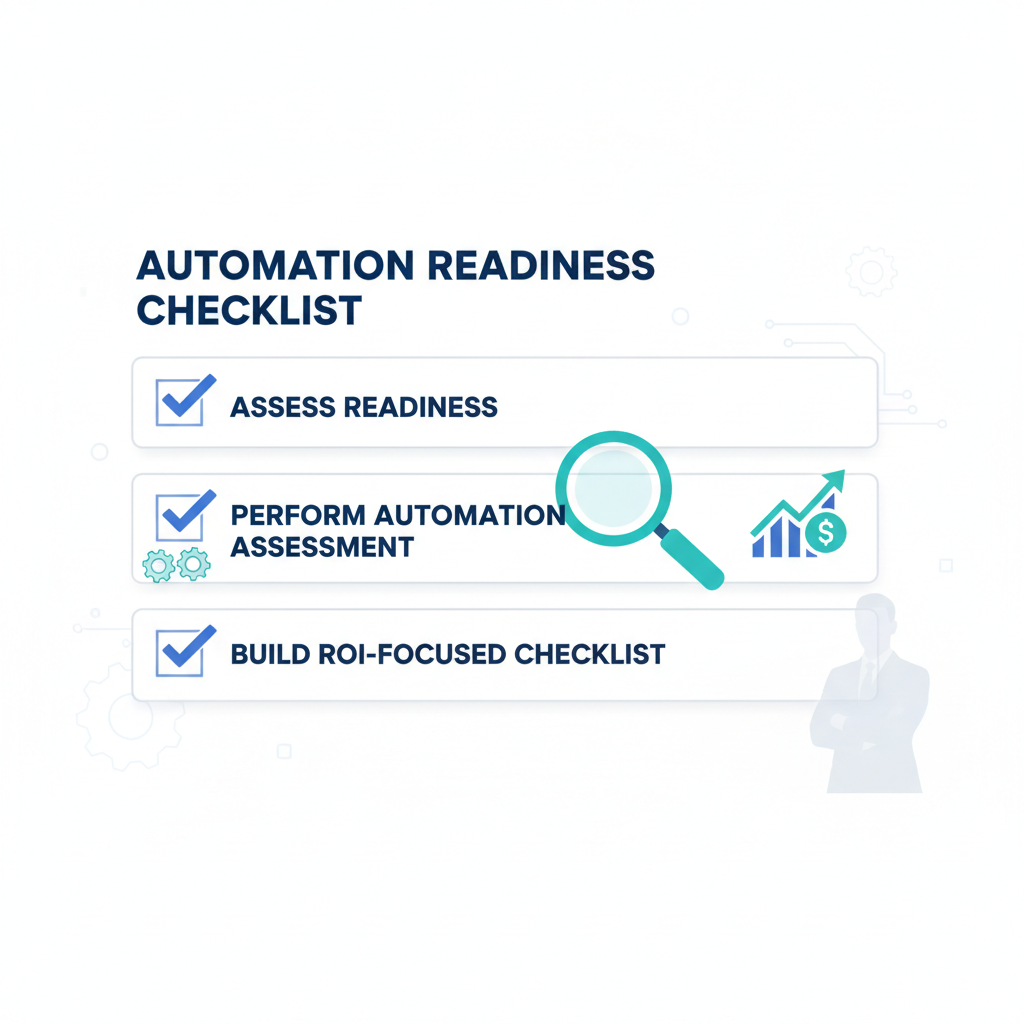
What exactly is automation readiness? It’s more than just having the right software or hardware. It’s about ensuring your entire organization – from your processes and systems to your people and culture – is prepared to successfully adopt, scale, and sustain automation solutions. This goes way beyond technical readiness and dives into operational alignment, including workflows, standard operating procedures, employee training, and data accuracy.
Before we jump into the nuts and bolts of getting automation-ready, let’s clear up a few key terms:
- Automation readiness looks at your organization’s overall preparation for implementing automated solutions
- An automation assessment evaluates your current state of maturity across processes, infrastructure, and culture
- A business automation checklist serves as your practical tool for identifying which processes are actually suitable for automation
Understanding Automation Readiness
You know what’s interesting about automation readiness? It’s a bit like preparing to renovate your house. Sure, you could just start knocking down walls, but smart homeowners first check the structural integrity, plan the layout, and make sure they have the right permits and resources.
In business terms, being “automation ready” means your workflows meet specific criteria. They should be:
- High-volume (happening frequently enough to justify automation)
- Repetitive (following the same steps consistently)
- Rule-based (operating on clear, definable logic)
- Stable (not changing frequently)
- Digital (or easily digitized)
- Low-exception (few special cases requiring human judgment)
I often use the garden analogy with my clients: You wouldn’t plant seeds in unprepared soil and expect a thriving garden. Similarly, you can’t drop automation into unprepared processes and expect magical results.
The most common obstacles I see businesses face include:
- Manual bottlenecks that haven’t been addressed
- Undocumented or inconsistent workflows
- Heavy reliance on human judgment
- Incomplete digital transformation
- Poor system integration
- Cultural resistance to change
For a broader overview of automation readiness concepts, see Introduction to Business Automation.
This aligns with the broader view of automation readiness that you can explore in depth via a practical guide to automation processes and tools (No-Code/Low-Code Automation Tools).
A practical expansion is covered in Common Processes to Automate in Small Businesses.
If you’re wondering how to identify automation opportunities, see Signs Your Business Needs Automation.
When you’re ready to explore concrete paths to begin, consider No-Code/Low-Code Automation Tools.
I often use the garden analogy with my clients: You wouldn’t plant seeds in unprepared soil and expect a thriving garden. Similarly, you can’t drop automation into unprepared processes and expect magical results.
The most common obstacles I see businesses face include:
- Manual bottlenecks that haven’t been addressed
- Undocumented or inconsistent workflows
- Heavy reliance on human judgment
- Incomplete digital transformation
- Poor system integration
- Cultural resistance to change
If you want a quick, actionable reference, check out CRM and Sales Automation Tools for how automation can streamline customer interactions and sales pipelines, and Automation Use Cases for Freelancers and Agencies for practical, real-world applications.
Frequently Asked Questions
What is automation readiness?
Automation readiness is more than just having the right software or hardware. It involves ensuring your entire organization—the processes, systems, people, and culture—is prepared to successfully adopt, scale, and sustain automation solutions. It goes beyond technical readiness and includes operational alignment, including workflows, standard operating procedures, employee training, and data accuracy.
What are the common obstacles?
Common obstacles include:
- Manual bottlenecks that haven’t been addressed
- Undocumented or inconsistent workflows
- Heavy reliance on human judgment
- Incomplete digital transformation
- Poor system integration
- Cultural resistance to change