Record-Breaking Box Office Performance for a Documentary
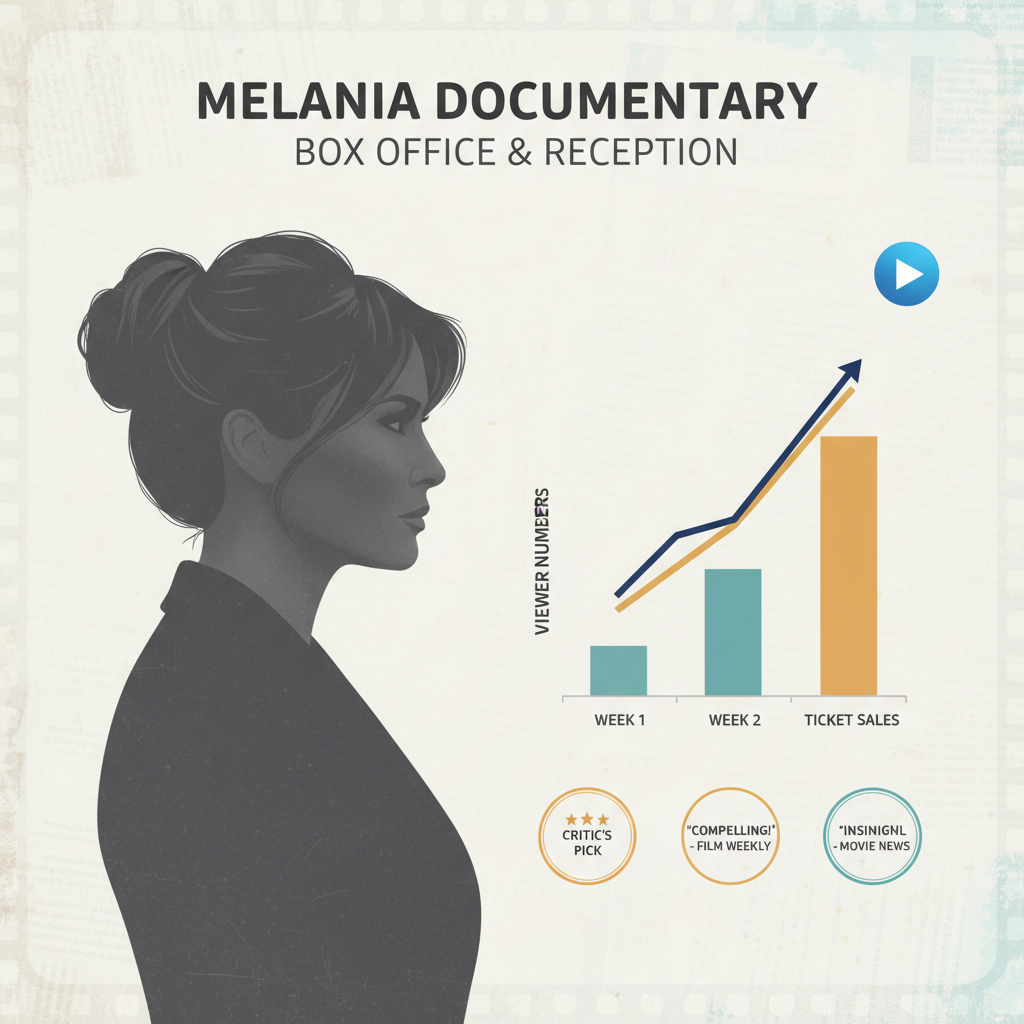
When a documentary about a First Lady outperforms nearly every non-concert documentary in a decade, yet earns some of the worst critical scores in cinema history, you know there’s a fascinating story behind the numbers.
And honestly? The 2026 release of Melania has created one of the most confusing moments I’ve seen in the entertainment industry. How does a film simultaneously break box office records and critical rating systems? It’s complicated — and way more interesting than most people realize.
Here’s what actually happened with Brett Ratner’s Melania documentary, Amazon MGM Studios’ massive $75 million gamble, and what this whole mess means for the future of politically-charged content. Because whether you loved it or hated it (and trust me, there’s not much middle ground here), this film changed the game.
Record-Breaking Box Office Performance for a Documentary
Let’s start with the numbers that made everyone’s jaw drop.
The Melania documentary box office pulled in $7-8 million during its opening weekend across 1,700 theaters in early 2026. Now, if you don’t follow documentary releases closely, that might not sound earth-shattering. But here’s the thing — it’s the highest domestic opening for a non-music, non-concert documentary in ten years.
I’ve watched documentary releases for years, and they typically open in maybe 50-500 theaters max. This thing hit 1,700 theaters right out of the gate. That’s blockbuster territory, not documentary territory.
To put this in perspective, Summer of Soul — which won an Oscar and got incredible reviews — made $3.7 million in its entire theatrical lifetime. The Melania documentary made double that in one weekend. By its second weekend, the cumulative domestic gross hit $14.5 million, despite a 51% drop (which is actually pretty standard for front-loaded releases).
The per-theater averages tell an even more interesting story. While most documentaries struggle to fill seats outside major cities, this one was packing theaters in specific regions. We’ll get to that regional breakdown in a minute, because that’s where things get really fascinating.
Amazon MGM Studios’ Strategic $75 Million Investment
Now here’s where the story gets wild.
Amazon MGM Studios dropped $40 million just for distribution rights — and get this, $28 million of that went directly to Melania Trump herself. Then they spent another $35 million on marketing. That’s a combined $75 million investment in a documentary.
Let me give you some context. Your typical documentary budget runs between $500,000 and $2 million. Total. Not just marketing — everything. Amazon spent more on marketing alone than most documentaries cost to make, market, and distribute combined.
So what were they thinking? Well, Amazon MGM Studios only formed in October 2023, and they’re playing a different game than traditional studios. This wasn’t really about theatrical box office at all (though that’s a nice bonus). The real play was always streaming.
See, Amazon doesn’t need this film to break even theatrically. They need it to drive Prime Video subscriptions and engagement. And with plans for a forthcoming docuseries, they’re building a whole content ecosystem around this. It’s corporate chess, not traditional filmmaking economics.
The break-even threshold for theatrical alone would be around $40-45 million — which they’ll never hit. But that’s not the point. The point is creating enough buzz and controversy to make it a must-watch on Prime Video. And on that front? Mission accomplished.
The Historic Critic vs. Audience Divide
Okay, this is where things get absolutely bonkers.
The Melania documentary reviews created the largest critic-audience gap in Rotten Tomatoes history. Critics gave it an 8-10% score. Audiences? Well, that depends on which audience you’re asking — and that’s exactly the problem.
On IMDb, it scored a 1.3 out of 10. That ties it for the second-worst rating ever on the platform. Ever. We’re talking worse than universally panned disasters that became punchlines.
But here’s what’s fascinating — verified audience scores tell a completely different story in certain demographics. The political polarization isn’t just influencing the numbers; it’s creating two entirely separate realities about the same film.
I’ve seen divisive films before. Fahrenheit 9/11 split audiences. 2000 Mules created controversy. But I’ve never seen anything quite like this, where the gap between critical assessment and audience reception became so wide it basically broke the measurement systems.
Critics called it propaganda, hagiography, and worse. One review I read said it made “infomercials look like cinema verité.” Ouch. But in certain theaters — particularly in red states — audiences were lining up and calling it “eye-opening” and “finally, the truth.”
The thing is, both groups watched the same movie. The divide isn’t about film quality in any traditional sense. It’s about something much deeper.
Faith-Based Marketing Model and Regional Success
So where did this thing actually perform well? That’s where the strategy becomes crystal clear.
Dallas, Houston, Tampa — Trump-stronghold cities dominated the box office performance. The regional heat map of ticket sales looked almost identical to electoral maps from recent elections. Coincidence? Not even close.
Amazon essentially borrowed the playbook from faith-based film marketing, and it worked beautifully. Instead of trying to appeal to everyone (which is impossible with this subject matter), they went all-in on core audience targeting.
Exit polls from theaters revealed three main motivations: political alignment (obviously), genuine curiosity about Melania Trump’s perspective, and — interestingly — limited alternatives in certain markets. When you’re in a smaller city and your choices are this or the latest superhero movie you’ve already seen, some people chose this.
The marketing campaign in red states was relentless. Church groups organized screenings. Conservative media personalities promoted it. Social media ads targeted specific regions with surgical precision. It’s the same approach that made Sound of Freedom a surprise hit — find your audience, speak directly to them, and ignore everyone else.
And you know what? For their purposes, it worked. The geographic concentration of ticket sales meant they could focus resources instead of spreading them thin. Why spend money marketing in Manhattan when you know it’ll flop there? Pour everything into markets where you’ve got a shot.
Amazon MGM Studios Top 10 All-Time Domestic Ranking
Here’s a fun fact that puts everything in perspective.
With $14.5 million domestic, Melania hit #10 on Amazon MGM Studios’ all-time domestic chart. It surpassed Saltburn ($11.4 million), which got way better reviews and way more cultural buzz.
Now, before you get too impressed — remember that Amazon MGM Studios only formed in October 2023. So we’re talking about a very short timeframe here. The upcoming Project Hail Mary will almost certainly knock it down the list.
But still. For a documentary to crack the top 10 of any major studio’s domestic rankings says something about the theatrical landscape right now. Traditional metrics don’t capture the whole picture anymore.
I’ve been tracking Amazon MGM’s theatrical releases since the merger, and there’s a clear pattern emerging. They’re not trying to compete with Disney or Universal on blockbuster tentpoles. They’re finding niches, exploiting them, and using theatrical as a marketing tool for streaming. It’s a fundamentally different business model.
Industry Expert Analysis: “Access and Leverage” Over Art
Jeff Bock, a box office analyst I’ve followed for years, nailed it when he called this an “access and leverage” play rather than an artistic endeavor. Amazon had access to Melania Trump’s story and the leverage to push it into 1,700 theaters. That combination matters more than critical acclaim in today’s fragmented media landscape.
Kevin Wilson, another industry analyst, talked about the “long-tail lifecycle” strategy — and that’s really what this is about. The theatrical run generates headlines, controversy, and awareness. Then it lives on Prime Video forever, getting discovered by new subscribers and keeping existing ones engaged.
Think about it this way: Netflix made Tiger King a cultural phenomenon without spending a dime on theatrical. Amazon’s doing the reverse — spending big on theatrical to create a cultural moment that drives streaming value.
The streaming profitability calculation is completely different from theatrical break-even math. Every new Prime subscriber is worth hundreds of dollars in lifetime value. If this documentary drives even a modest number of new subscriptions or prevents cancellations, it’s already paid for itself several times over.
And that forthcoming docuseries? That’s the real long-term play. Keep people engaged, keep them subscribed, keep them in the Amazon ecosystem. The $75 million investment starts looking pretty smart when you think about it that way.
What This Means for the Future of Political Documentaries
So what happens next? Because this isn’t a one-off — it’s a precedent.
We’re going to see more high-budget political documentaries from streaming platforms. Not because they’re profitable in traditional terms, but because they serve strategic purposes. They generate buzz, they attract specific demographics, they create talking points.
Critical reception is becoming less relevant for certain types of content. When your target audience actively distrusts mainstream critics (and let’s be honest, many do), a 10% Rotten Tomatoes score might actually help more than hurt. It confirms the narrative that “elites don’t get it.”
The direct-to-consumer marketing evolution is accelerating. Why bother with traditional publicity when you can speak directly to your audience through social media, podcasts, and targeted digital advertising? The Melania documentary proved you can bypass the entire traditional media apparatus and still succeed — at least with certain audiences.
Audience fragmentation isn’t a problem anymore; it’s a feature. Instead of trying to make content that appeals to everyone (which is impossible), platforms are making content that deeply resonates with specific groups. It’s the Netflix model applied to documentaries.
I’m already hearing about similar projects in development. Political figures on both sides are watching this closely. If Melania Trump can get a $28 million payday for her story, you’d better believe others are taking meetings.
The international market considerations are huge too. This played differently in different countries, and streaming platforms can optimize content for regional tastes in ways theatrical never could. What flops in one territory might be massive in another.
The Bottom Line
Look, the Melania documentary isn’t going to win any Oscars. It probably won’t be studied in film schools (except maybe as a case study in marketing). But it represents something bigger than itself.
We’re watching the entertainment industry fracture into different realities, where success metrics depend entirely on what you’re trying to achieve. Amazon didn’t need critical acclaim or broad audience appeal. They needed targeted engagement and strategic positioning — and they got it.
The $7-8 million opening weekend broke documentary records. The 1.3 IMDb rating broke rating systems. The critic-audience divide broke measurement tools. Everything about this release broke something, and that’s exactly what makes it fascinating.
Whether this is good or bad for documentaries as an art form — well, that depends on what you think documentaries should be. If they’re supposed to inform and enlighten broad audiences, this is probably troubling. If they’re content products designed to serve specific strategic purposes, this is brilliant.
Me? I think we’re going to see a lot more of this. The streaming wars aren’t just about quantity anymore; they’re about creating cultural moments that drive subscription decisions. And political documentaries — controversial, divisive, conversation-starting political documentaries — are perfect for that.
The Melania documentary didn’t just make money or break records. It proved that in 2026, you can succeed spectacularly while failing traditionally. And that’s the new normal.
Ready to understand how entertainment industry trends affect your content strategy? Our experts can help you navigate this rapidly changing landscape and identify opportunities others are missing.