Understanding AI Automation ROI: A Guide to Measuring Success
Understanding AI Automation ROI: A Guide to Measuring Success
Estimated reading time: 4 minutes
Key Takeaways
- AI automation combines AI technologies to learn, adapt, and make decisions beyond simple task execution
- It can process unstructured data, make real-time decisions, learn from mistakes, and handle complex tasks
- 24/7 operation without fatigue can drive significant efficiency and reduce costs when implemented well
Table of contents
Imagine walking into your office one morning to find that all those tedious, repetitive tasks that used to eat up your team’s time are now happening automatically in the background. Your employees are focused on creative projects and strategic thinking, while AI-powered systems handle everything from data entry to customer inquiries. This isn’t science fiction – it’s the reality of AI automation today, and businesses everywhere are racing to understand its true value.
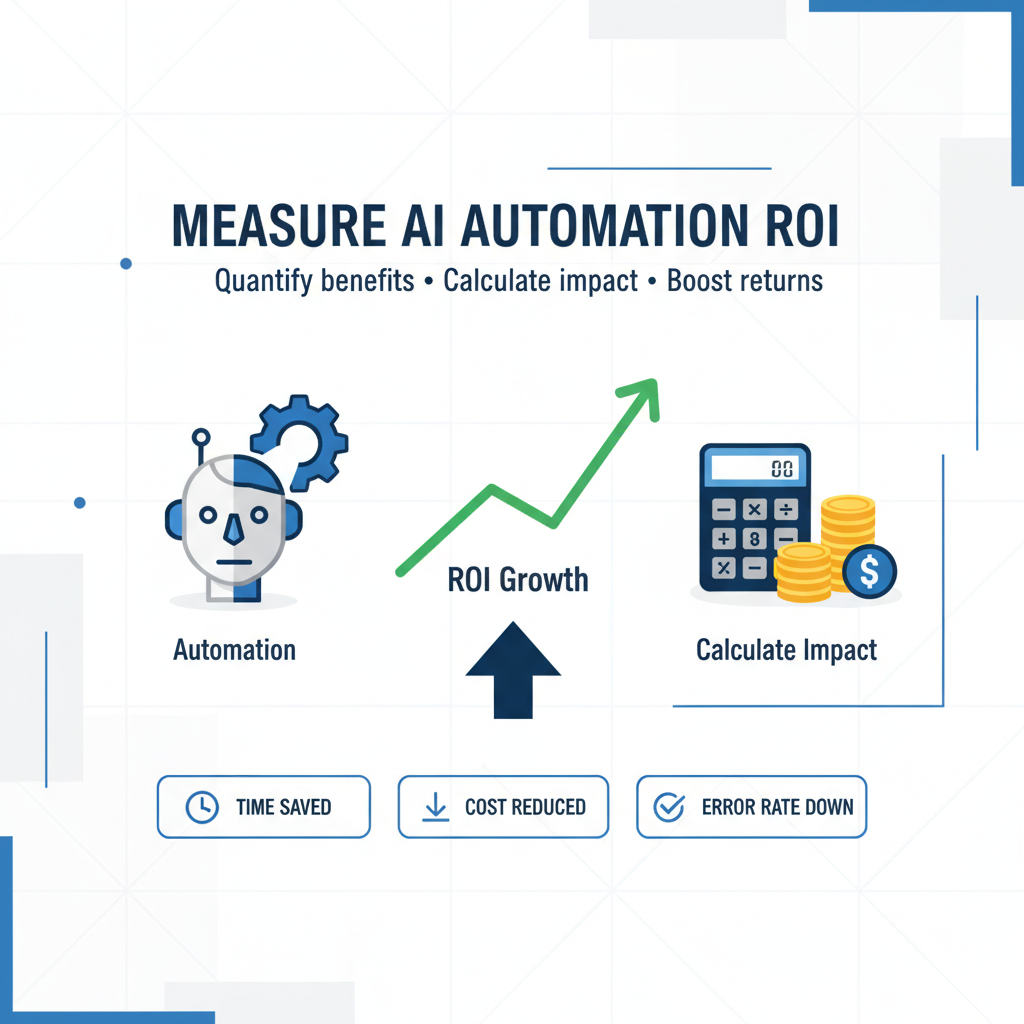
Let’s talk about AI automation ROI – something I’ve seen many businesses struggle to get their heads around. At its core, we’re looking at how to measure the returns we get from investing in artificial intelligence and automation technologies. But here’s the thing: it’s not as straightforward as calculating traditional ROI, and that’s exactly why we need to dive deeper.
I’ve spent years helping companies implement AI automation solutions, and I’ve learned that success depends on understanding both the obvious and hidden benefits these systems bring. Let’s break this down together, starting with what AI automation really means in today’s business world.
What Makes AI Automation Different?
Think of traditional automation as a conveyor belt – it does one thing, over and over, exactly the same way. Now, AI automation is more like having a smart assistant who not only handles tasks but learns and adapts as they go. It combines artificial intelligence technologies like machine learning, natural language processing, and computer vision to create systems that can think, learn, and make decisions.
Here’s what modern AI automation can do:
– Process unstructured data like emails and documents
– Make real-time decisions based on changing conditions
– Learn from mistakes and improve over time
– Handle complex tasks that previously required human judgment
The game-changer? These systems work 24/7 without fatigue, making them incredibly cost-effective once properly implemented. But that brings us to the million-dollar question: How do we measure whether it’s worth the investment?
For a primer on understanding automation in practice, see Introduction to Business Automation.
A practical overview of automation ROI and readiness can be found here: Automation ROI and Readiness Guide.
[Continues in next part due to length…]
Frequently Asked Questions
What makes AI automation different?
Think of traditional automation as a conveyor belt – it does one thing, over and over, exactly the same way. Now, AI automation is more like having a smart assistant who not only handles tasks but learns and adapts as they go. It combines artificial intelligence technologies like machine learning, natural language processing, and computer vision to create systems that can think, learn, and make decisions.