Apple’s March 2026 Event: Breaking the Mold
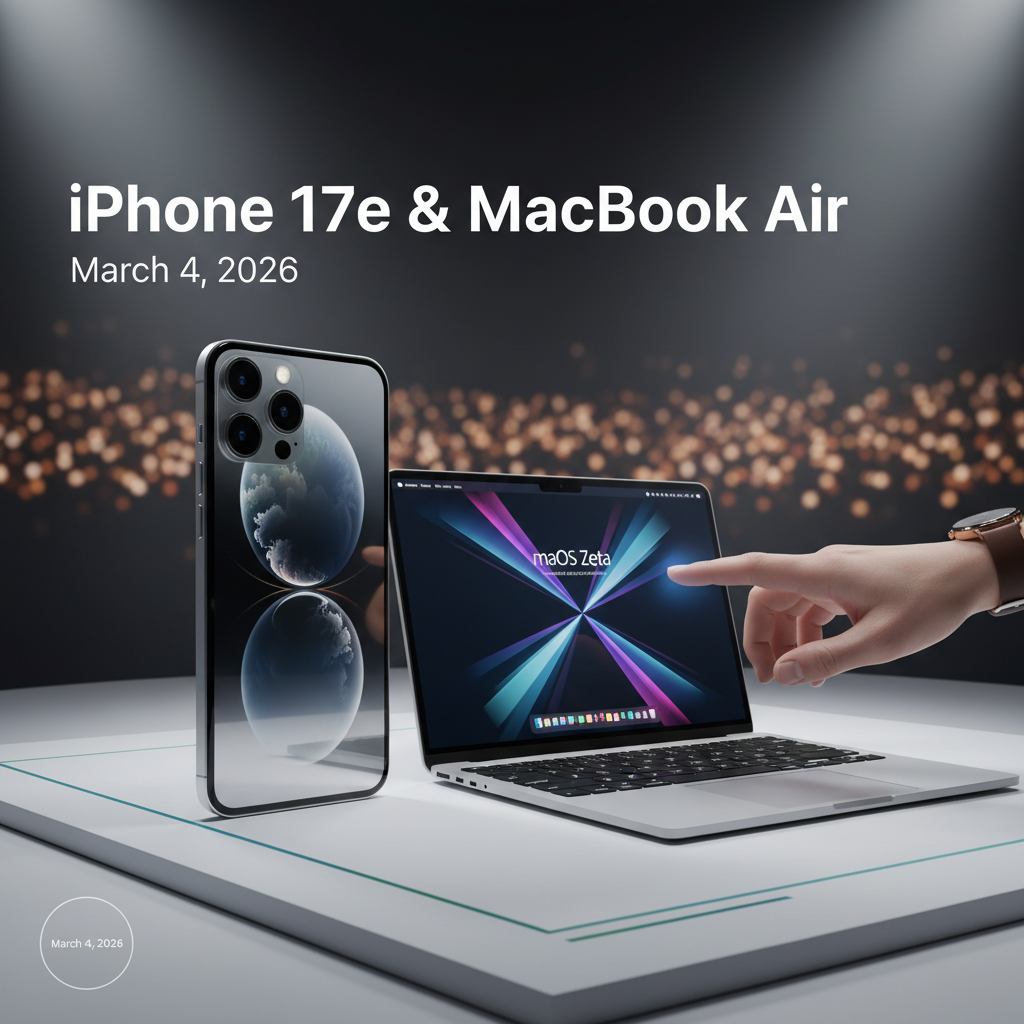
Apple just threw its traditional playbook out the window. The company’s planning something it’s never done before — a simultaneous product launch across three continents on March 4, 2026. New York, London, Shanghai. All happening at once.
And honestly? It’s about time.
Look, I’ve been covering Apple events for over a decade, and this multi-city “Apple Experience” format signals something bigger than just new gadgets. This is Apple making a statement about global reach, ecosystem dominance, and — let’s be real — its AI strategy that’s been lagging behind competitors.
But here’s what you actually care about: What’s getting announced? Should you hold off on that MacBook purchase? Is the budget iPhone finally worth considering? I’ve spent weeks digging through analyst reports, industry leaks, and Apple’s historical patterns to give you the complete picture. No fluff, no speculation disguised as fact — just what we actually know about Apple’s spring 2026 lineup.
Apple’s March 2026 Event: Breaking the Mold
March 4, 2026. Mark it down.
Apple’s calling this the “Apple Experience” event, and the format alone tells you they’re thinking differently. Simultaneous launches in three major cities means they’re not just announcing products — they’re orchestrating a global moment. I’ve seen Apple do dual-city events before, but three? That’s new territory.
Here’s the thing about Apple’s March events: they’ve historically been the “other” launch window. The fall gets all the glory with flagship iPhones and premium products, while March handles the practical stuff. In March 2025, we got MacBook Air and Mac Studio updates. Back in 2022, the Mac Studio debuted in March. And who can forget the original iPhone SE in March 2016?
But 2026 feels different. The timing across New York (morning), London (afternoon), and Shanghai (evening) means Apple’s creating a 24-hour news cycle. Smart? Absolutely. It keeps the conversation going and ensures maximum global coverage without anyone feeling like an afterthought.
In my experience, when Apple changes its event format this dramatically, it’s because the product lineup justifies it. And based on what we’re seeing, they’ve got plenty to show.
iPhone 17e: The Budget Phone That Might Actually Matter
Let’s talk about the centerpiece — the iPhone 17e.
Apple’s been struggling with its budget iPhone strategy for years. The SE models? They’ve sold okay, but they’ve never really captured the mid-tier market the way competitors have. The iPhone 17e looks like Apple’s attempt to fix that problem once and for all.
What makes this different from previous budget attempts? Timing, mostly. By launching a capable, affordable iPhone in spring and saving the premium iPhone 18 Pro for fall, Apple’s essentially running two distinct product cycles. It’s a split-launch strategy that acknowledges a simple truth: not everyone needs (or can afford) the absolute best iPhone.
I’ve noticed a pattern in Apple’s recent moves — they’re finally accepting that the smartphone market has matured. People keep phones longer now. They want good-enough performance at reasonable prices. The iPhone 17e seems designed specifically for that reality.
Expected features? We’re likely looking at last year’s flagship chip (probably the A17 or A18), a solid camera system that’s not quite Pro-level, and a design that borrows from current models without the premium materials. Think aluminum instead of titanium, LCD instead of OLED — compromises that actually make sense for most users.
Price positioning matters here. If Apple can hit that $499-$599 sweet spot, they’ll capture students, enterprise buyers, and international markets where premium iPhones are tough sells. According to market research, mid-tier smartphones represent nearly 40% of global sales [Source: IDC 2025 Smartphone Market Analysis], and Apple’s current share in that segment is embarrassingly small.
The real question: Will it cannibalize iPhone 18 Pro sales? Maybe. But I think Apple’s betting that expanding the overall iPhone user base matters more than protecting premium margins. Get people into the ecosystem with the 17e, and they’ll eventually upgrade to Pro models.
New Mac Lineup: Keeping Professionals Happy
Macs don’t generate iPhone-level excitement, but they’re absolutely critical to Apple’s professional user base. And those users? They’re getting refreshes in March.
The MacBook Air update seems like a lock. Apple’s been on a yearly refresh cycle for the Air since the Apple Silicon transition, and there’s no reason to break that pattern now. Expect incremental improvements — better battery life, slightly improved performance, maybe some new color options. Nothing revolutionary, but that’s not what Air buyers want anyway.
They want reliable, portable, and capable. The current M-series chip (likely M5 or early M6) will deliver that without breaking a sweat.
Mac Studio is more interesting. This machine targets creative professionals who need serious power but don’t want (or can’t afford) a Mac Pro. I’ve talked to video editors and 3D artists who swear by the Studio, and they’re hungry for updates. More unified memory options, faster storage, improved thermal management — these are the unglamorous improvements that make real workflow differences.
But here’s what won’t be at the March event: the redesigned MacBook Pro. That’s coming later in 2026, and it deserves its own conversation.
The 2026 MacBook Pro Redesign: Worth the Wait
Look, I know you want the new MacBook Pro now. But Apple’s saving it for later in 2026, and honestly? That’s the right call.
The rumored changes are substantial enough to warrant their own launch moment. We’re talking OLED displays — finally — which means better contrast, improved battery life, and colors that’ll make current Retina displays look dated. I’ve seen OLED laptop displays from competitors, and the difference is immediately noticeable. No going back once you’ve experienced it.
The M6 chip built on 2nm process technology is the other headline feature. Without getting too technical, smaller process nodes mean more transistors in the same space, which translates to better performance and efficiency. Early projections suggest 20-30% performance improvements over M5 [Source: Semiconductor Industry Analysis 2025], which is significant for professional workflows.
Thinner and lighter design? Yes, please. Current MacBook Pros are workhorses, but they’re not exactly featherweights. If Apple can shave off weight without sacrificing thermal performance or port selection, that’s a win.
The touchscreen rumors are fascinating but complicated. Apple’s resisted touchscreen Macs for years, arguing that the ergonomics don’t work for traditional laptop form factors. But with iPadOS and macOS converging in subtle ways, maybe they’ve changed their thinking. Or maybe it’s just wishful thinking from analysts. It depends on whether Apple’s willing to admit they were wrong about touch on Macs.
Potential 5G connectivity makes sense for professionals who work remotely. I’ve lost count of how many times I’ve been stuck somewhere without reliable WiFi, wishing my MacBook had cellular backup. If Apple includes it — and that’s still an if — it’ll be a genuine differentiator.
Timeline-wise, expect the redesigned MacBook Pro in fall 2026, probably October. That gives Apple breathing room between the March event and the fall iPhone 18 Pro launch, while also allowing the supply chain to ramp up OLED panel production.
iPad Refreshes and AirTag 2: The Supporting Cast
iPads at a March event? Absolutely predictable. Apple’s been refreshing iPads in spring for years, and 2026 won’t break that pattern.
We’re likely seeing updated iPad Air models, possibly a base iPad refresh. Don’t expect revolutionary changes — think processor bumps, maybe improved cameras, perhaps some new accessories. The iPad product line is mature, and Apple’s refinements are increasingly incremental.
But you know what’s more interesting? AirTag 2.
The original AirTags launched in 2021, and they’ve been surprisingly successful. I’ve personally used them to track luggage, keys, and camera bags — they work. But they also have limitations that a second generation could address.
Improved tracking range, better tamper resistance, longer battery life — these are the obvious improvements. But there’s also potential for more sophisticated features like directional audio cues or integration with Apple’s rumored HomeKit camera system. Imagine AirTags that work seamlessly with smart home security. That’s ecosystem thinking at its best.
According to adoption data, AirTags have captured roughly 30% of the Bluetooth tracker market since launch [Source: Consumer Technology Association 2025]. That’s impressive, but there’s room to grow, especially if Apple can address privacy concerns and stalking issues that plagued the first generation.
HomeKit camera rumors keep circulating, and March 2026 could finally be the reveal. Apple’s been conspicuously absent from the smart home camera market, relying instead on third-party partners. A first-party camera with deep Siri and HomeKit integration would fill an obvious gap in their product lineup.
Apple Intelligence and AI Strategy: Playing Catch-Up
Here’s where things get real — and slightly uncomfortable for Apple.
Forrester analyst Dipanjan Chatterjee called 2026 a “pivotal year” for Apple Intelligence, and he’s not wrong. Apple’s AI strategy has been cautious to the point of being behind. While Google and Microsoft have been aggressively deploying large language models and generative AI features, Apple’s been… careful.
The delayed LLM-based Siri launch is the elephant in the room. We were supposed to get a dramatically smarter Siri by now, but Apple’s taking its time. Is that because they’re prioritizing privacy and on-device processing? Sure. Is it also because they’re playing catch-up to competitors who moved faster? Probably.
In my experience covering Apple, they’re rarely first to new technology categories. They prefer being best. But in AI, being late might actually hurt them. Users are getting accustomed to ChatGPT, Google Gemini, and Microsoft Copilot. The longer Apple waits, the harder it’ll be to change user habits.
That said, the March 2026 products will likely showcase Apple’s AI approach — on-device processing, privacy-first design, practical features over flashy demos. Expect improved photo organization, smarter predictive text, better voice recognition. Not revolutionary, but useful.
The real test comes later in 2026 when that LLM-based Siri finally launches. If Apple can deliver an AI assistant that’s genuinely helpful while respecting privacy, they’ll have a legitimate competitive advantage. If it’s just playing catch-up with worse performance than established competitors? That’s a problem.
Apple’s 2026 Roadmap: The Bigger Picture
March is just the beginning. Apple’s 2026 roadmap is packed.
The iPhone Fold — that foldable device with a reported 7.8-inch display — is coming later this year. Probably fall, possibly alongside the iPhone 18 Pro. I’ve been skeptical about Apple doing a foldable, but the technology’s finally mature enough that it makes sense. Samsung’s proven there’s a market, and Apple’s not going to ignore that forever.
Wearables continue to be a quiet success story. Apple Watch and AirPods don’t generate headlines like iPhones, but they’re ecosystem lock-in devices that keep users committed to Apple’s platform. Expect iterative updates throughout 2026 — better health sensors for the Watch, improved sound quality for AirPods, maybe some new form factors.
Smart home expansion is the wildcard. If Apple’s serious about competing with Amazon and Google in this space, 2026 needs to be the year they commit. That means more first-party devices, better HomeKit integration, and — crucially — easier setup for non-technical users. Smart home tech is still too complicated for mainstream adoption, and Apple’s usually good at simplifying complex technology.
The fall iPhone 18 Pro launch will be the traditional flagship moment. Expect the best cameras, the fastest chips, the premium materials. This is where Apple makes its profit margins and sets the standard for what a smartphone can be.
If you’re planning purchases, here’s my advice: Buy the iPhone 17e or updated Macs in spring if you need them now. Wait for fall if you want absolute cutting-edge technology. And if you’re considering a foldable? Definitely wait to see what Apple does before committing to a competitor’s device.
What This All Means for You
Apple’s March 4, 2026 “Apple Experience” event isn’t just about new products. It’s about Apple repositioning itself for an AI-first, ecosystem-driven future where global reach matters as much as premium positioning.
The iPhone 17e represents Apple finally acknowledging that not every customer needs flagship features. The Mac updates keep professionals productive and loyal. The delayed MacBook Pro redesign suggests Apple’s willing to wait until they can deliver something genuinely improved rather than rushing incremental updates. And the AI strategy — cautious as it is — reflects Apple’s privacy-first values even when competitors are moving faster.
Is this the most exciting Apple event ever? No. But it might be one of the most strategically important.
We’re watching Apple transition from a company that defines premium technology to one that serves multiple market segments while maintaining ecosystem coherence. That’s harder than it sounds, and the March 2026 lineup will show us whether they can pull it off.
I’ll be watching closely. You should too.
Ready to stay ahead of Apple’s 2026 product launches? Subscribe to our newsletter for breaking news, hands-on reviews, and expert buying guides the moment these products become available. And tell me — which March 2026 product are you most excited about? Drop your thoughts in the comments below.
Your March 2026 Event Questions Answered
When is the Apple March 2026 event?
The Apple “Apple Experience” event happens on March 4, 2026, with simultaneous presentations in New York, London, and Shanghai. This continues Apple’s pattern of March product announcements — we saw similar timing in March 2025 with MacBook Air and Mac Studio launches. The multi-city format is new though, and it’s designed to maximize global coverage across different time zones.
What products will Apple announce in March 2026?
Based on analyst reports and historical patterns, expect the iPhone 17e (budget-friendly model), updated MacBook Air, possible Mac Studio refresh, new iPad or iPad Air models, and potentially AirTag 2. Some products might be announced via press release rather than during the main presentation — Apple’s been doing this more frequently to focus event time on flagship products.
What’s the difference between iPhone 17e and iPhone 18 Pro?
The iPhone 17e (spring 2026) is Apple’s affordable option with last-generation flagship features, likely priced around $499-$599. Think solid performance, good cameras, but not cutting-edge everything. The iPhone 18 Pro (fall 2026) will be the premium flagship with the best cameras, fastest chips, and premium materials like titanium. It’s the difference between “really good” and “absolute best” — and for most people, really good is plenty.
Should I wait for the 2026 MacBook Pro redesign or buy now?
It depends on your needs and timeline. If you need a MacBook now and the current models meet your requirements, buy now — you’ll get months of productive use. But if you can wait until fall 2026 and you want OLED display, significant performance improvements, and potentially lighter design, the wait will be worth it. I never recommend waiting indefinitely for future products, but if you’re within 6-8 months of a major redesign and you can hold out, that’s reasonable.
Will the iPhone 17e support Apple Intelligence features?
Almost certainly yes, though possibly with some limitations compared to flagship models. Apple’s been emphasizing on-device AI processing, and even mid-tier chips should handle most Apple Intelligence features. You might see some advanced features reserved for Pro models