Redwood Materials Cuts Staff After $350M Raise: AI Pivot Explained
Redwood Materials Cuts Staff After $350M Raise: AI Pivot Explained
What does a company do right after raising $350 million? If you’re Redwood Materials, apparently — cut staff.
I know. It sounds backwards. Here’s a battery recycling company that just closed a massive funding round, pushed its valuation to $6 billion, and has one of the most respected clean energy entrepreneurs at the helm. And they’re laying people off?
The move has left investors, employees, and industry watchers scratching their heads. But here’s the thing — this isn’t your typical “company in distress” scenario. Something bigger is happening at Redwood Materials, and honestly, it tells us a lot about where the intersection of clean energy and AI infrastructure is headed in 2025.
Let me walk you through what’s actually going on, why it matters, and what this means for the future of battery recycling and energy storage.
What Happened? The Redwood Materials Layoffs Explained
First, the facts. Bloomberg News broke the story: Redwood Materials cut roughly 5% of its workforce. Not a massive bloodletting, but not insignificant either. [Source: Bloomberg via TechCrunch]
The timing? That’s what makes this interesting. These layoffs came just weeks after the company closed a $350 million funding round in October 2025. [Source: The Tech Buzz]
For context, Redwood Materials isn’t some struggling startup. This is a company founded in 2017 by JB Straubel — you know, the former Tesla CTO who basically helped build the modern EV industry. The company’s now valued at $6 billion and has been considered one of the most promising players in the battery recycling space. [Source: TechCrunch]
Their original business model made a lot of sense: take scrap from battery cell production, consumer electronics, and used EV batteries, then recycle them back into usable materials. Close the loop. Build a domestic supply chain. Help solve the climate crisis.
So why cut 5% of your team right after investors hand you $350 million?
Redwood Materials’ Original Mission — And Why It Mattered
Let’s back up for a second. When Straubel founded Redwood Materials in 2017, he was making a bet that most people didn’t fully appreciate yet.
The thesis was simple but powerful: as EVs took off, we’d need a closed-loop system for battery materials. Mining new lithium, cobalt, and nickel forever isn’t sustainable — economically or environmentally. But if you could recover those materials from end-of-life batteries and manufacturing scrap, you could build a circular supply chain.
Redwood tackled three streams. Battery cell production scrap (the easiest — manufacturers were already generating waste). Consumer electronics (your old laptops and phones have valuable materials). And eventually, used EV batteries reaching end-of-life.
In my experience watching the clean energy space, this was one of those rare ideas that checked every box. Climate impact? Huge. Economic logic? Sound. Strategic importance for U.S. manufacturing? Critical.
The company grew steadily from 2017 to 2024, building out recycling facilities and establishing partnerships with battery manufacturers. It wasn’t flashy, but it was important work. The kind of infrastructure play that makes the energy transition actually possible.
But here’s where things get interesting. Steady, predictable recycling operations — while important — don’t always generate the explosive growth that venture-scale investors need to see.
The $350M Raise and the AI Data Center Pivot
October 2025 brought the plot twist. Redwood Materials closed a $350 million funding round, pushing the company’s valuation to $6 billion. [Source: The Tech Buzz]
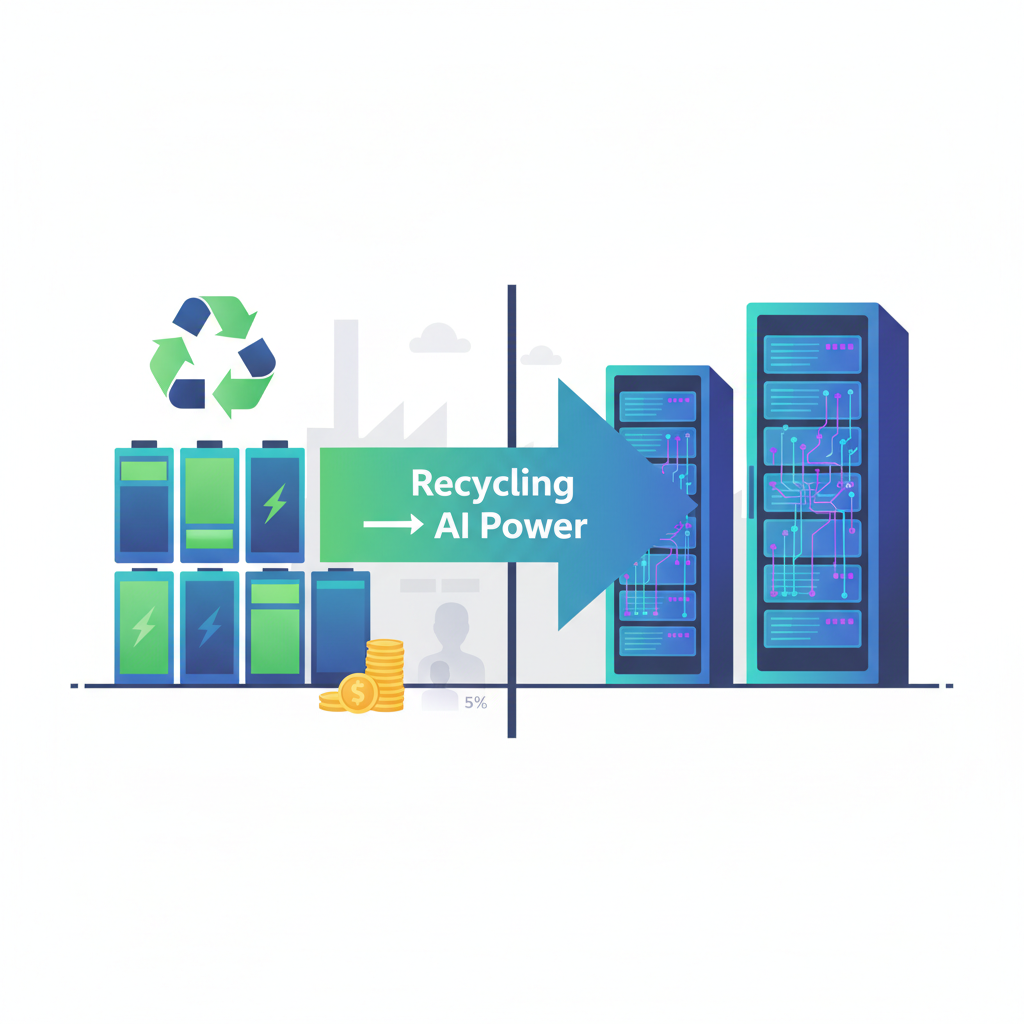
But the money wasn’t just for scaling up battery recycling. The stated purpose? Expansion into energy storage products for AI data centers.
Wait, what?
Look, I get why this sounds random at first. But it actually makes more sense than you’d think. AI data centers are absolutely massive energy consumers — and they need reliable, responsive energy storage to manage power loads and prevent outages. We’re talking grid-scale batteries, uninterruptible power supply systems, the works.
And who knows how to build, optimize, and manage battery systems better than a company that’s been taking them apart and putting them back together for years?
The strategic logic is there. AI infrastructure is one of the fastest-growing markets in the world right now. Every tech giant is racing to build more data centers to power their AI ambitions. Those data centers need energy storage. Lots of it.
Redwood’s materials expertise — understanding battery chemistry, supply chains, manufacturing processes — is genuinely transferable to this new market. It’s not like they’re pivoting from batteries to, I don’t know, social media apps.
But (and this is a big but) it’s still a pivot. A significant one. You’re taking a company built around recycling operations and asking it to compete in the volatile, fast-moving world of AI infrastructure.
Why Lay Off Staff Right After a Funding Round?
Here’s where we get to the apparent paradox. Money in the door, people out the door. It seems contradictory.
But I’ve seen this pattern before in tech companies making strategic shifts. It’s not about financial distress — it’s about realignment.
Think about it this way. If you’re pivoting from steady recycling operations to building energy storage products for AI data centers, you need different skills. The roles that made sense for scaling a recycling facility might not be the roles you need for developing and deploying grid-scale battery systems.
You might need fewer operations managers and more software engineers. Fewer recycling process specialists and more power electronics experts. It’s not that the people you’re letting go aren’t talented — it’s that the company’s needs have changed.
There’s also the unit economics angle. Before you scale a new product line, you want to make sure your cost structure makes sense. Investors who just handed you $350 million want to see a credible path to profitability in this new vertical. Sometimes that means getting leaner before you get bigger.
As The Tech Buzz pointed out, these “layoffs just weeks after a $350 million raise expose the challenges of pivoting from steady recycling operations to the volatile AI infrastructure market.” [Source: The Tech Buzz]
That tension — between the predictable nature of recycling and the breakneck pace of AI infrastructure — is real. And it requires different organizational structures, different skill sets, different ways of operating.
Is it risky? Yeah. Is it necessarily a red flag? Not really. It’s more like a yellow flag — a signal that execution will be challenging, and the company knows it.
What This Means for the Battery Recycling Industry
Now let’s zoom out. What does Redwood’s pivot tell us about the battery recycling industry as a whole?
Honestly? It raises some uncomfortable questions.
If the most well-funded, best-connected battery recycling company in North America is diversifying away from pure recycling, what does that say about the standalone viability of the business model?
Here’s the challenge: the EV battery recycling market has a chicken-and-egg problem. We don’t have enough end-of-life EV batteries yet to run a fully scaled recycling operation. Most EVs on the road today are less than five years old. Their batteries will last another 10-15 years.
So in the meantime, recyclers are mostly processing manufacturing scrap and consumer electronics. That’s valuable work, but it’s not the massive scale that venture investors are hoping for.
Government incentives help. The Inflation Reduction Act has provisions that make domestic battery material production more attractive. But policy support alone doesn’t solve the timing problem.
You know what does have massive, immediate demand? Energy storage for AI data centers.
I wouldn’t be surprised if other battery recycling companies start looking at similar diversification strategies. The competitive landscape is already crowded — companies like Li-Cycle, Ascend Elements, and others are all vying for position.
The ones that survive and thrive will probably be the ones that can find multiple revenue streams while waiting for the EV recycling market to fully mature. Redwood’s making that bet now.
JB Straubel’s Vision — Bold Bet or Overreach?
Let’s talk about the man behind all this. JB Straubel isn’t just any entrepreneur. He co-founded Tesla and served as its CTO for 15 years. He’s one of the most respected figures in clean energy — someone who’s made long-term bets before and watched them pay off spectacularly.
When Straubel talks about the energy transition, people listen. His credibility is basically unmatched in this space.
So when he decides to pivot Redwood Materials toward AI infrastructure, it’s worth taking seriously. He’s not chasing a trend — he’s seeing something in the market that others might be missing.
The case FOR the pivot is compelling. The AI data center energy storage market is enormous and growing fast. Redwood’s expertise in battery systems, materials, and supply chains is genuinely applicable. And the company has the capital to execute.
But — and this is where it gets complicated — pivoting a manufacturing and recycling company into AI infrastructure is operationally complex. These are different businesses with different dynamics, different customer relationships, different sales cycles.
Manufacturing and deploying grid-scale battery systems for data centers isn’t the same as running recycling facilities. It requires different partnerships, different regulatory navigation, different technical capabilities.
The $6 billion valuation suggests investors still have confidence. But the layoffs introduce uncertainty. They’re a visible sign that the transition isn’t seamless.
What I haven’t seen yet is clear communication from Straubel and the Redwood leadership about how they’re managing this transition. How are they thinking about the balance between recycling operations and the new energy storage products? What’s the timeline for scaling the AI data center business? How do they plan to maintain their leadership in battery recycling while building a new vertical?
Those answers matter. Because right now, we’re watching one of the most important companies in the clean energy space make a major strategic shift. It could be brilliant. It could be overreach. Probably, it’s somewhere in between.
The Bigger Picture: Where Clean Energy Meets AI Infrastructure
Here’s what I find most interesting about all this. Redwood Materials’ pivot is happening at exactly the moment when clean energy and AI infrastructure are colliding in real, tangible ways.
AI data centers are energy hogs. They need massive amounts of power, delivered reliably, with sophisticated management systems to handle fluctuating loads. That’s creating unprecedented demand for energy storage solutions.
At the same time, we’re in the middle of an energy transition that requires building out entirely new supply chains for battery materials, manufacturing capacity, and recycling infrastructure.
These two trends were always going to intersect. Redwood’s bet is that the intersection happens faster and more dramatically than most people expect.
If they’re right, this pivot looks prescient. If the AI infrastructure boom slows down or the technical challenges prove harder than expected, it might look like a distraction from their core mission.
Time will tell. But one thing’s clear — the next few years at Redwood Materials are going to be fascinating to watch.
What Should We Be Watching For?
If you’re following this story (and if you care about clean energy or AI infrastructure, you should be), here’s what to pay attention to:
First, watch for announcements about actual customer contracts in the AI data center space. The pivot is only real if Redwood can land deals with major players.
Second, keep an eye on the recycling operations. Are they maintaining momentum there, or is the core business getting neglected during the pivot?
Third, look for hiring patterns. Who is Redwood bringing in to replace the people they let go? That’ll tell you a lot about where they’re really placing their bets.
And finally, watch the competitive landscape. If Redwood’s pivot works, expect others to follow. If it struggles, expect competitors to double down on pure recycling plays.
The battery recycling industry is still young. It’s still figuring out its business models, its markets, its place in the broader energy transition. Redwood Materials is one of the most important companies in that space — which means their strategic choices matter for everyone.
This isn’t just about one company’s layoffs or one funding round. It’s about how we build the infrastructure for both the clean energy transition and the AI revolution. Those are two of the biggest technological shifts of our lifetimes, and they’re happening simultaneously.
Redwood Materials is betting they can play a major role in both. That’s ambitious. That’s risky. And honestly? That’s exactly the kind of bet that either changes industries or becomes a cautionary tale.
We’ll find out which one soon enough.
Ready to stay ahead of the clean energy and AI infrastructure trends that are reshaping our world? Contact our experts for personalized guidance on navigating these rapidly evolving markets.