Discovery is the real threat, not the verdict
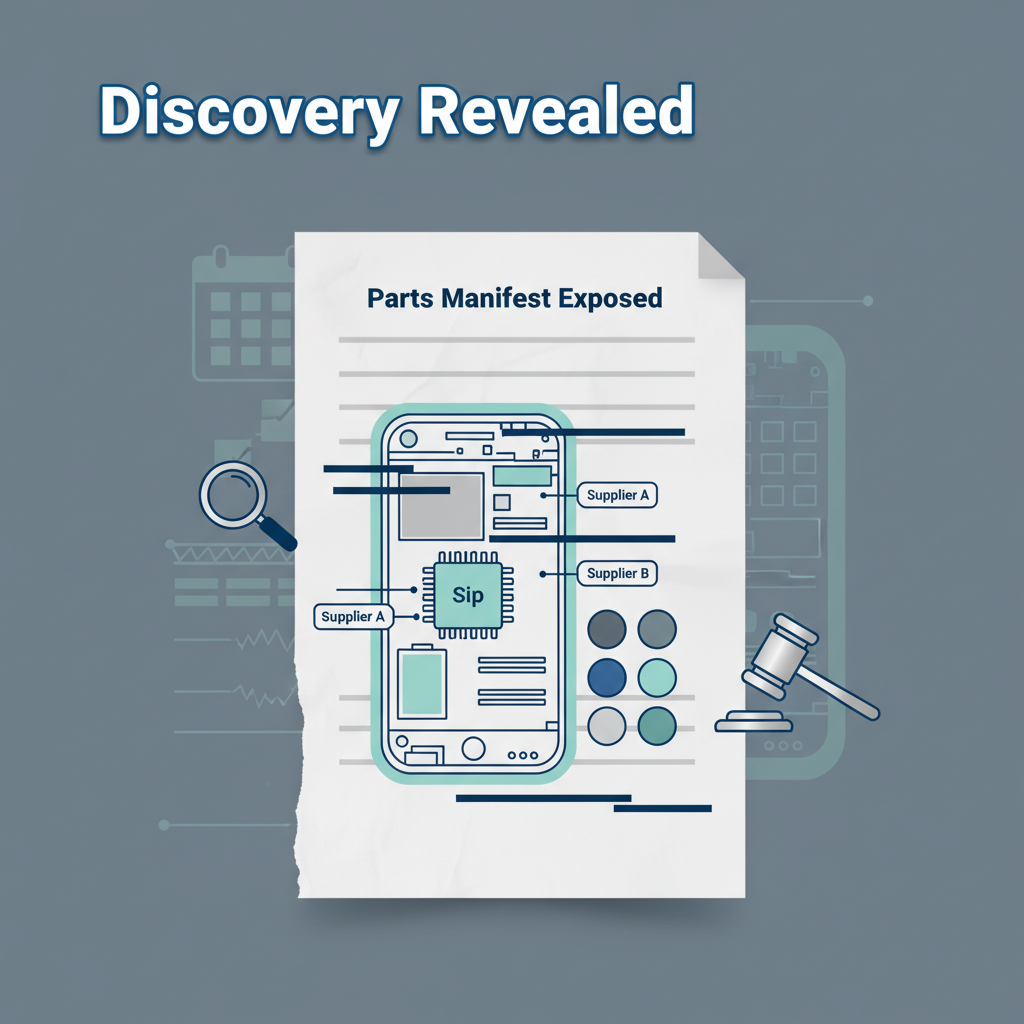
OpenAI hasn’t announced a phone. It hasn’t confirmed a form factor, a release window, or a manufacturing partner. What it has done, apparently, is send job candidates into Apple interviews with a shopping list. According to Apple’s 41-page complaint, OpenAI interviewers asked Apple employees to bring actual components to interviews — batteries, logic boards, systems-in-package, housings, back glass in different colors. They allegedly asked about CAD tools, supplier relationships, and metal-finishing processes. A stolen laptop. A secret authentication bug used to exfiltrate files. A manufacturing partner deceived into revealing proprietary finishing techniques. Apple filed all of this in a public court document. Whatever Apple’s litigation strategy turns out to be, it has already produced something OpenAI’s PR team never would have: a parts manifest.
The lawsuit against OpenAI and Sam Altman, filed in federal court in California, reads less like a traditional trade secret case and more like an unintended product teardown. Apple is seeking damages and injunctive relief. But the real damage — the information damage — has already occurred. Apple’s lawyers have published, in meticulous detail, enough specificity about OpenAI’s hardware ambitions that anyone paying attention now has a clearer picture of what’s under development than OpenAI itself has chosen to share.
This is worth understanding not as celebrity tech drama but as a structural problem in how litigation works as a disclosure mechanism.
Discovery is the real threat, not the verdict
The lawsuit names OpenAI’s Chief Hardware Officer Tang Tan directly — a hire who came from Apple, along with over 400 other former Apple employees who have moved to OpenAI in recent years. That’s not a brain drain; that’s a migration. It’s the kind of talent concentration that happens when one company’s hardware ambitions become real enough to justify wholesale recruitment of experienced teams. The complaint treats this not as a hiring decision but as evidence of intentional knowledge transfer, and the court record now reflects that interpretation permanently.
But the litigation risk Apple has created extends beyond the verdict. Apple’s legal filing seeks damages, but it also seeks court orders compelling disclosure of OpenAI’s internal records — supplier contracts, design specifications, manufacturing partner agreements, internal communications about sourcing and production timelines. For a company that has kept its hardware program almost entirely opaque, that’s a materially different kind of exposure than losing a jury trial. Discovery in a trade secret case means OpenAI’s technical files, email chains, and vendor relationships become part of the legal record. Competitors, analysts, and regulators all gain access.
Polymarket traders were giving OpenAI only a 26% chance of launching consumer hardware by the end of 2026 even before this litigation materialized. That odds-market signal alone suggested significant uncertainty around whether the hardware program would ever ship at scale. The lawsuit hasn’t eliminated that uncertainty — it’s weaponized it.
What a discovery order actually means, operationally, is exposure.
If the court compels production, OpenAI will have to turn over supplier contracts that specify component specifications, manufacturing volumes, and delivery timelines. It will have to produce design files that show what the device actually looks like, how it’s assembled, and what the bill of materials looks like down to the resistor level. It will have to produce internal communications discussing go-to-market strategy, pricing assumptions, and production ramp scenarios. Partner NDAs will become part of the legal record. The entire architecture of the program — who makes what, when, and to what spec — becomes discoverable. Apple knows this. That’s why the complaint is so specific.
The component list tells you what Apple thinks OpenAI is building
The specific parts Apple’s complaint enumerates — batteries, systems-in-package, back glass in multiple colors, power systems, thermal management components — aren’t the components of a smart speaker or a wearable. They’re not the bill of materials for a software service accessed through an existing device. They map to a compact, handheld consumer device. Something you’d hold in your hand. Something that needs thermal management and comes in color options. Apple’s own lawyers effectively drew the outline of a phone.
The complaint goes further. It alleges that OpenAI approached a supplier working on battery and power systems, and that it used confidential information involving Apple’s proprietary metal-finishing and anodization processes. These are manufacturing details that matter only if you’re trying to achieve a specific fit-and-finish standard — the kind of industrial precision that Apple has spent three decades refining at scale. You don’t steal someone’s anodization process if you’re building a prototype. You steal it if you’re planning production runs in the millions.
There’s an irony worth sitting with here.
Apple’s decision to be maximally specific in its complaint — presumably to strengthen its legal case, to make the allegations concrete and credible to a jury — has handed analysts, competitors, and journalists a cleaner product roadmap than OpenAI has published. OpenAI has never officially confirmed it’s building a device. It has never described form factors, power requirements, materials, or manufacturing approaches. Apple’s legal team just did that work for them, in a public filing.
Contrast what OpenAI has officially said about hardware with what is now in the public court record. Official statement: essentially nothing. It’s mentioned hardware as a strategic direction in earnings calls, vaguely. Court filing: an itemized list of components, manufacturing partners, supplier relationships, and the specific technical processes it wanted to acquire from Apple. One is marketing silence. The other is involuntary disclosure.
The complaint also provides temporal markers. It references specific hiring events, specific meetings where components were discussed, specific dates when alleged theft occurred. These timelines tell you something about the maturity of the program. This isn’t a skunkworks project in early exploration. This is a program advanced enough that it’s engaging with suppliers, hiring specialized hardware talent, and apparently moving toward production decisions.
Apple alleges that OpenAI employees approached suppliers and manufacturing partners, sometimes using false pretenses, to extract information about production capabilities, sourcing relationships, and finishing processes. The complaint names specific individuals. It describes specific conversations. This level of operational detail suggests a program that’s moved past the whiteboard phase and into the phase where you’re actually figuring out how to manufacture something at scale.
What this means for systems thinkers
Enterprise IT leaders watching this case should resist the instinct to file it under tech industry drama. What’s actually unfolding is a live demonstration of how trade secret litigation works as competitive intelligence — involuntarily, in both directions. Apple is trying to wound OpenAI’s hardware program. It wants damages. It wants an injunction. It wants to slow down or stop what OpenAI is building. That’s the stated goal.
But in pursuing that goal through litigation, Apple has confirmed something much larger: that OpenAI’s hardware program is real, materially advanced, and apparently close enough to production that specific supplier relationships and finishing processes were worth the risk of theft. The program is real enough that Apple felt threatened enough to file suit. It’s real enough that Apple’s legal team could enumerate specific components and manufacturing details with apparent confidence.
The structural lesson here applies well beyond this particular litigation. When you go to court over trade secrets, you’re forced to describe what the secrets actually are. You’re forced to be specific. You’re forced to put details in a public record. The more airtight your case, the more you’re forced to disclose. Apple may win the lawsuit and lose the information war.
The next time a key engineer leaves your organization for a competitor, ask yourself whether your own offboarding process would survive the scrutiny of a 41-page complaint. Ask whether your supplier agreements contain enough specificity that a plaintiff’s attorney could use them to map your entire supply chain. Ask whether your internal communications about roadmaps, timelines, and manufacturing partners are secure enough that their disclosure in discovery wouldn’t advance a competitor’s understanding of what you’re building and when you’re building it.
OpenAI didn’t announce a phone. Apple did it for them, involuntarily, in federal court.