qualcomm computex 2026 ai agents: a comprehensive guide to the year of agentic AI and personal companions
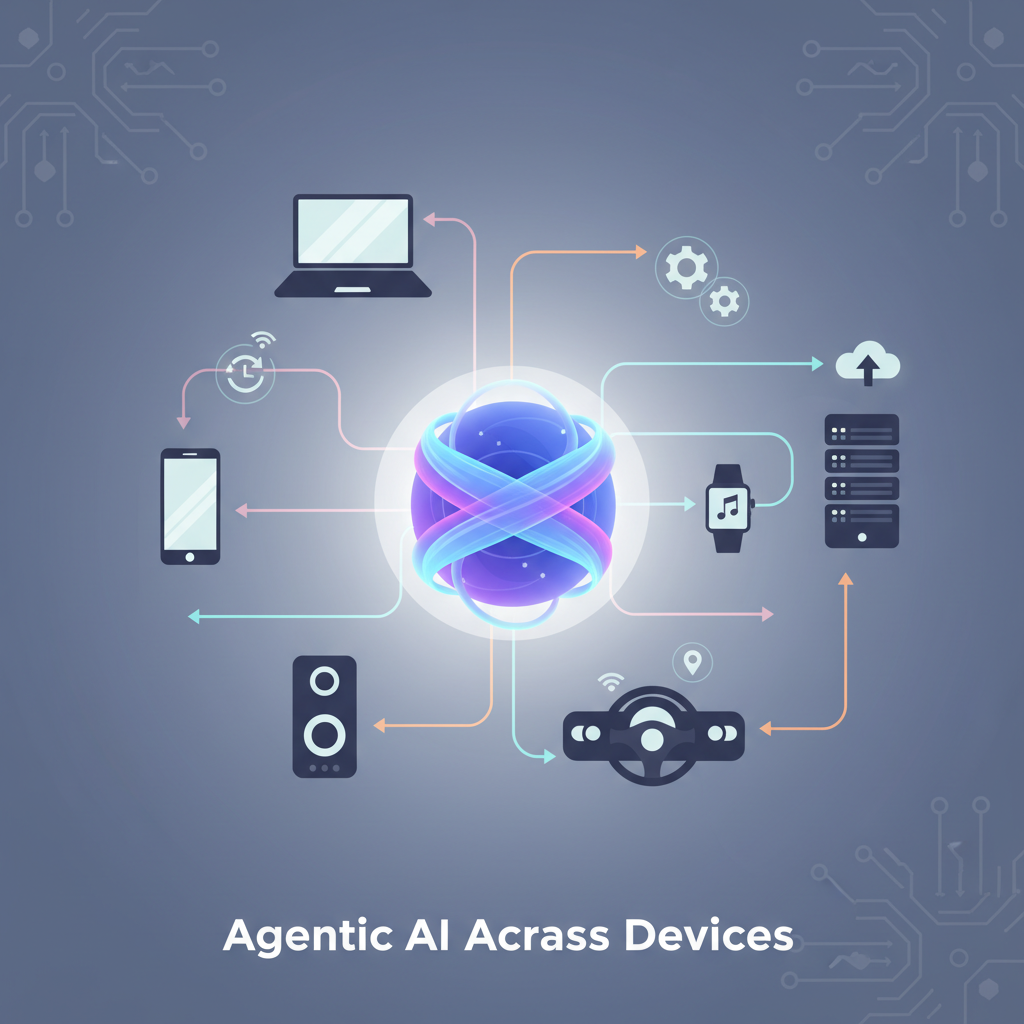
Qualcomm Computex 2026 AI Agents: The Year That AI Became Your Companion
Estimated reading time: 12 minutes
Key Takeaways
- AI agents will be proactive teammates that know your preferences, manage tasks, and operate across devices and environments.
- They run on a compute continuum spanning on-device, edge, and data center resources to balance privacy, performance, and efficiency.
- Qualcomm’s vision centers on Agentic AI—agents that persist as companions rather than mere tools.
Table of contents
- 1. The Core Message from Qualcomm: 2026, The Year of Agents
- 2. What Qualcomm Means by “AI Agents” and “Agentic AI”
- 3. The Architectural Vision: Where and How Agents Run
- 4. Devices and Form Factors: The New Worlds of AI Agents
- 5. Data Center Platforms: Dragonfly and Dragonwing
- 6. Positioning Qualcomm in the AI Landscape: Edge vs. Cloud Titans
- 7. How AI Agents Will Change Your Life: Use Cases and User Experience
- 8. Transparency, Privacy, and the Inescapability of Agents
- 9. What’s Available Now and What’s on the Horizon?
Qualcomm’s Computex 2026 keynote paints a bold future where AI agents redefine how humans interact with technology. No longer mere tools, these agents become proactive teammates and companions, always running, always learning, and always acting with your best interests in mind.
1. The Core Message from Qualcomm: 2026, The Year of Agents
Qualcomm’s CEO, Cristiano Amon, opened the keynote with a powerful statement: “2026 is the year of agents.” This was not just marketing hype; it was a clear message about a fundamental shift in computing paradigm. Instead of relying on prompt-driven chatbots that wait for your input, the future belongs to autonomous AI agents that can take initiative, manage complex tasks, and act on your behalf (source, source).
He emphasized that these agents will become the center of your digital life, replacing smartphones or PCs as the primary interface. Your devices will become endpoints connecting you to these intelligent digital agents that persistently work for you, no matter where you are or which device you happen to be using (source, source).
Qualcomm framed this evolution as a compute continuum spanning all layers—from tiny wearable devices and smartphones, to edge servers, and massive cloud data centers. Agents will run across this entire spectrum, dynamically splitting tasks based on need, efficiency, and privacy (source).
2. What Qualcomm Means by “AI Agents” and “Agentic AI”
Throughout the keynote and surrounding coverage, Qualcomm laid out several defining characteristics that separate these AI agents from the chatbots we’re familiar with today:
Persistent and Proactive
These AI agents don’t merely wait for a command. They run continuously, maintaining context over days, weeks, or even months, and importantly, initiate actions themselves. They orchestrate tasks and workflows autonomously, without needing you to be involved in every step (source).
They “carry context forward,” keeping track of your preferences, activities, and environment to act reliably and securely on your behalf (source).
Intent-Driven and Multi-Step
Humans express intentions like “plan my week” or “finish this project.” The agent will understand these goals, breaking them down into smaller tasks spread across multiple apps, services, and devices. This multi-step orchestration goes far beyond a simple prompt-response mechanism, enabling the agent to coordinate complex workflows without continuous user input (source).
Amon described this evolution as AI moving beyond just augmenting human work to “taking action on their own”, handling multiple services simultaneously across different contexts (source).
Cross-Device and User-Centric
One of the most exciting aspects is that the agent isn’t trapped in a single device. Instead, it moves with the user, available anytime and anywhere. Whether you’re on your smartphone, a laptop, wearing smart glasses, or using earbuds, you interact with one persistent agent that knows you (source).
All these connected devices become endpoints or terminals, mere access points to your AI agent’s intelligence (source).
Autonomous Computing Model
ServeTheHome aptly described Qualcomm’s future as “agent-driven computing rather than user-driven computing.” This means that AI agents will effectively “run the computer for you,” overseeing and automating tasks without human supervision (source).
Similarly, The Register noted that agents will “harness AI models to automate complex tasks without the need for human supervision,” moving towards a truly autonomous digital assistant (source).
From Tool to Teammate
This is not just an upgrade of tools—it’s a fundamental redefinition of AI’s role. AI is evolving into Agentic AI, where it behaves less like a passive instrument and more like an active teammate or companion.
Qualcomm sees the agent as a “companion” who not only filters information, plans activities, and flags important decisions but is also a constant presence at home and work (source, source).
3. The Architectural Vision: Where and How Agents Run
Qualcomm’s vision is not just about concepts but roots itself deeply in architecture. They describe the deployment of AI agents across a compute continuum that spans diverse hardware tiers.
3.1 Compute Continuum: Spanning Devices to Data Centers
The idea is that agent workloads are broken up and distributed intelligently across devices and infrastructure:
- On-device CPU: Hosts the core orchestration logic that “runs” the agent.
- On-device NPU/GPU: Executes smaller, latency-sensitive inference tasks using compact AI models locally.
- Edge/Near-cloud: Handles more complex, resource-hungry computations efficiently outside the device.
- Data center: Manages large-scale workloads, multi-agent coordination, and training/inference for massive AI models (source).
This multi-tier approach is essential for managing the economics, performance, and privacy of personal AI agents at scale. Running everything solely in the cloud would be too slow, expensive, and potentially jeopardize user privacy (source).
3.2 Agent Orchestration: The AI Conductor
Agents will maintain a unified, long-term context about your work, preferences, schedule, and environment. They will orchestrate tasks across multiple apps and services simultaneously, acting as a real-time digital conductor.
This orchestration extends to sensor inputs from all connected endpoints, such as cameras, location data, biometrics, and other environmental signals, enabling context-aware and proactive decision-making (source, source).
Qualcomm describes AI agents and frameworks as “the new form of computing,” shifting away from traditional software runtimes to agent-based, persistent, and intelligent systems that coordinate the digital ecosystem (source).
4. Devices and Form Factors: The New Worlds of AI Agents
Qualcomm’s vision spans a wide range of devices, led by its powerful Snapdragon platforms.
4.1 Smartphones and PCs: The First Frontier
According to Qualcomm, today’s smartphones and PCs were not designed for always-on, agentic AI. They need more advanced CPUs, NPUs, and longer battery life to support continuous, multi-device agent workloads (source).
Still, Snapdragon-powered phones and PCs are already leading this new era, hosting early agent features that are starting to scale up. Importantly, the role of smartphones is to become just another endpoint, connected to your always-present agent that operates behind the scenes (source).
4.2 Personal AI Devices and Wearables: The Rise of New Categories
Beyond phones and PCs, Qualcomm spoke about an emerging class of personal AI devices powered by Snapdragon chips:
- Earbuds and hearables that can listen, assist, and manage information hands-free.
- Smart glasses and extended reality (XR) headsets for immersive, contextual AI experiences.
- Smart displays and TVs acting as hubs for family or personal digital agents.
- Home assistants and appliances intelligently coordinated by AI agents.
Demos showed agents helping people exercise, manage grocery shopping, and enhance productivity at home and work, always seamlessly present through various devices (source).
4.3 Automotive, Robotics, and IoT: Intelligent Everywhere
Qualcomm’s roadmap also includes:
- Robotics and the IoT via its Dragonwing product line, embedded in robotics and edge devices to deliver agent intelligence outside traditional endpoints.
- Automotive applications, where AI agents coordinate navigation, in-car entertainment, and adjust to personal preferences, powered by Snapdragon Automotive platforms.
This highlights Qualcomm’s ambition to embed AI agents deeply into the fabric of everyday technology and transportation.
5. Data Center Platforms: Dragonfly and Dragonwing
While the keynote largely focused on agents running at the edge and on devices, Qualcomm unveiled two new important branded platforms:
Dragonfly: AI Data Center Compute
Dragonfly is Qualcomm’s newly teased data center-scale AI compute platform, indicating the company’s intent to compete in server-side AI workloads, especially those linked to multi-agent ecosystems (source).
Amon stressed that Qualcomm now provides a broad portfolio spanning “every tier of the compute continuum, from the smallest wearables to datacenters at very high performance.” This underscores Qualcomm’s integrated vision from edge to cloud (source).
Dragonwing: IoT, Embedded, and Robotics
Dragonwing is Qualcomm’s brand for its IoT, embedded systems, and robotics compute lineup. This fleet of hardware is envisioned to power edge AI agents in a wide variety of lightweight, specialized form factors (source).
Though Amon didn’t dive deep into data center products at Computex, the naming and positioning show Qualcomm building a full ecosystem around agentic AI.
6. Positioning Qualcomm in the AI Landscape: Edge vs. Cloud Titans
Qualcomm’s agentic AI story is part of a larger industry race in artificial intelligence.
- Nvidia and Qualcomm: Splitting the Map Reports from Computex 2026 highlight a divergence: Nvidia doubles down on cloud, data center, and enterprise multi-agent ecosystems, while Qualcomm stakes its claim in the edge, mobile, and consumer device space, focusing on billions of endpoint devices where AI agents will operate ubiquitously (source).
- Microsoft and Windows: Unmetered Intelligence Microsoft’s vision of bringing intelligence to every desk and home aligns well with Qualcomm’s ambition for Windows on ARM PCs powered by Snapdragon chips hosting these agents. Qualcomm positions itself as the enabling mobile and ARM-based engine for this “unmetered intelligence” on consumer devices (source).
Together, these dynamics paint a picture of a fragmented but complementary AI landscape, where Qualcomm leads agentic AI at the edge as the nexus of everyday digital life.
7. How AI Agents Will Change Your Life: Use Cases and User Experience
At its heart, Qualcomm’s vision is practical and personal. The keynote highlighted specific, exciting examples of what AI agents might do day to day.
Work and Productivity
Imagine an agent that:
- Knows all your ongoing projects and tasks.
- Prepares summaries and flags critical decisions.
- Manages your calendar intelligently.
- Surfaces the most relevant information you need in real time.
Agents could maintain persistent status boards as central hubs for families or teams, keeping everyone updated on daily progress and upcoming activities (source).
Personal Life and Scheduling
In your personal life, AI agents could:
- Coordinate complicated schedules, balancing work and family commitments.
- Book appointments and recommend recreational activities based on your preferences.
- Reconcile calendars across various domains seamlessly and proactively (source).
Contextual and Sensor-Driven Assistance
Agents will rely on continuous sensor data streams from your devices—location, motion, biometrics, even cameras—to make smart, context-aware decisions (source).
Use cases like fitness coaching, grocery shopping, and home management featured prominently in demos, showing agents that adjust and respond naturally throughout your day (source).
Companion-Like Presence
Qualcomm promises agents that go beyond mere tools—they will feel like trusted companions always with you, quietly assisting and supporting without requiring action or input at every turn (source).
8. Transparency, Privacy, and the Inescapability of Agents
The futuristic vision also invites important questions around ethics and privacy.
Invisible Yet Inescapable
Amon reflected that AI agents will become “invisible” in everyday use but also “inescapable,” following users seamlessly across devices and environments. Your phone, earbuds, and wearables will act as mere extensions of your personal agent running persistently in the background (source).
Transparency and user control are discussed as well, though this was conceptual. The Register paints a picture reminiscent of a Black Mirror scenario—powerful and potentially intrusive AI that blends invisibly into daily life, raising concerns about surveillance and governance (source).
Data distribution and privacy are aided by a multi-tiered architecture, keeping sensitive data on-device wherever possible to reduce central data collection risks (source).
Nevertheless, the continuous data aggregation needed for these agents presents serious challenges around privacy, consent, and oversight. Qualcomm acknowledges these issues but has yet to provide concrete solutions (source).
9. What’s Available Now and What’s on the Horizon?
Qualcomm’s message at Computex 2026 was strategic and architectural rather than product-specific. However, some concrete realities have emerged:
- Now: Snapdragon-powered phones and PCs with NPUs and improved power profiles are already shipping. Early agentic features such as contextual assistants and multi-step automations are rolling out, marking the dawn of this new era (source).
- Near Term: Wider deployment of agent capabilities across new device categories—wearables, smart home gadgets, and personal AI devices.
- Medium Term: The full realization of the agent-first model where devices are simple endpoints and AI agents orchestrate entire workflows across automotive, robotics, and industrial IoT.
- Long Term: Autonomous multi-agent ecosystems will span all aspects of daily life and industry, with Qualcomm’s silicon and software frameworks powering the edge and Dragonfly serving the data center backbone.
Conclusion: Qualcomm’s AI Agents Promise a New Digital Dawn
Qualcomm’s Computex 2026 keynote paints an exciting and bold future where AI agents redefine how humans interact with technology. No longer mere tools, these agents become proactive teammates and companions, always running, always learning, and always acting with your best interests in mind.
By pioneering an architecture that spans from the smallest earbuds and wearables to powerful data centers, Qualcomm is positioning itself as the key player in the agentic AI revolution. While challenges around privacy and transparency abound, the promise of seamless, intelligent assistance woven into every aspect of life fuels an irresistible curiosity: what will life be like when your AI agent truly becomes part of you?
The journey has already begun—and 2026 might just be the year when AI agents become the new normal for millions around the world.
Explore the future of AI firsthand and stay tuned as Qualcomm and its partners bring this vision from keynote to reality.
Sources
- GadgetMatch Qualcomm Computex 2026 Keynote
- Qualcomm Computex 2026 Keynote Video
- ServeTheHome Qualcomm Computex 2026 Live Coverage
- The Register Article on Qualcomm AI Agents
- CommonWealth English Coverage
- TradingView Article on Qualcomm Dragonfly
https://anilbohra.me/principles-building-ai-agents-pdf
https://anilbohra.me/future-of-work-ai-agents
https://anilbohra.me/anthropic-ai-agents-financial-services
https://anilbohra.me/effective-context-engineering-ai-agents
https://anilbohra.me/best-ai-agents-2025-guide
}