What We Know About the Plane Crash in La Baule, France
What We Know About the Plane Crash in La Baule, France
Here’s what we can confirm — and look, the details are still pretty limited, which honestly makes this even more heartbreaking.
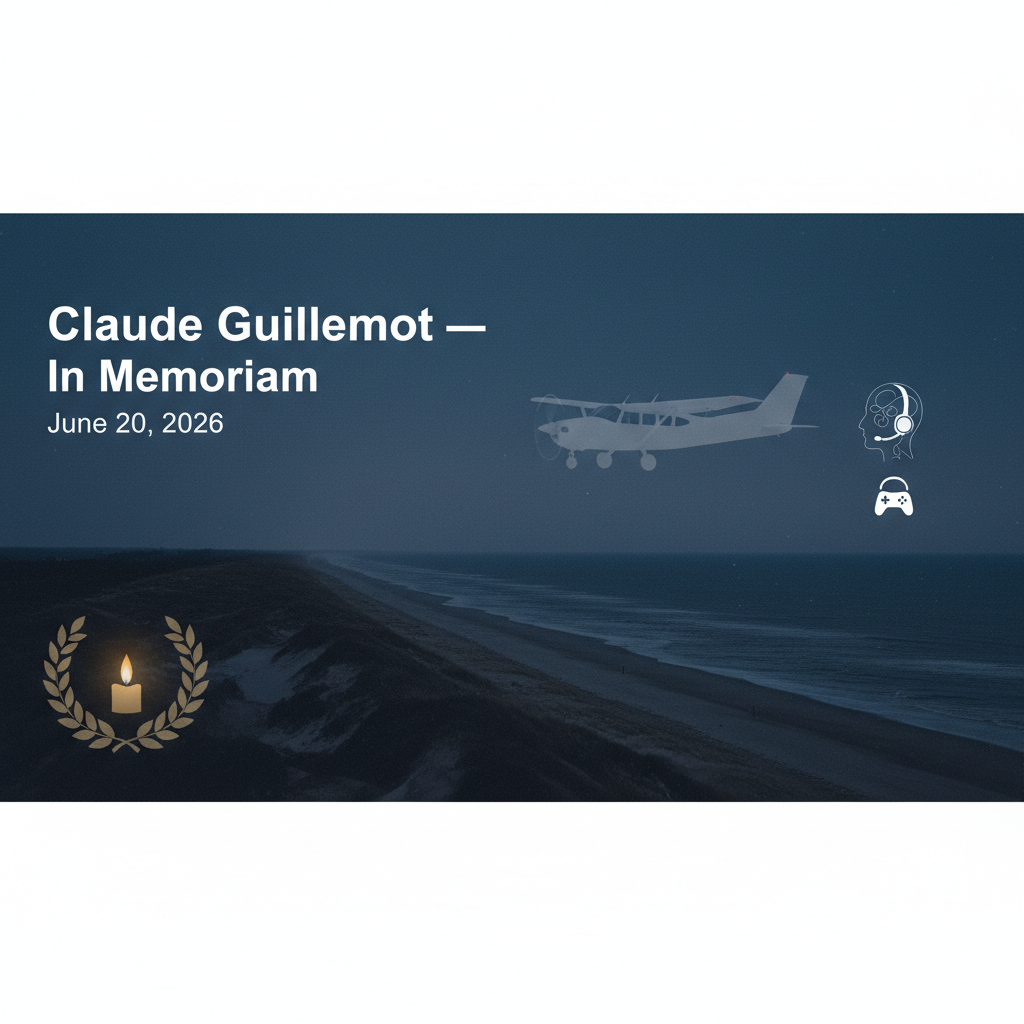
On Friday, June 20, 2026, a twin-engine Cessna 421 went down in La Baule-Escoublac, a resort town on France’s Atlantic coast. The Loire-Atlantique SDIS 44 fire and rescue services confirmed two fatalities: Claude Guillemot, 69, and the aircraft’s owner-operator, whose identity hasn’t been publicly released yet.
I’ve covered enough aviation incidents to know that those first 24 to 48 hours are always murky. And right now? We don’t have a confirmed cause. No official investigation results, no preliminary findings from aviation authorities. Just the tragic fact that a plane went down and two lives were lost.
The Cessna 421 is actually a pretty popular choice for private aviation — it’s a twin-engine pressurized aircraft that’s been around since the 1960s. Reliable, generally speaking. But like any aircraft, it demands respect and proper maintenance.
La Baule-Escoublac itself is this beautiful coastal commune in the Loire-Atlantique department. It’s the kind of place people go to unwind, to enjoy the French Atlantic coast. The irony of such a tragedy happening in what’s essentially a vacation destination isn’t lost on anyone.
What strikes me most is how sudden these things are. One moment you’re flying, the next — everything changes. For the families involved, for the companies Claude led, for an entire industry that owes him so much.
Who Was Claude Guillemot? A Life in Gaming and Business
If you’re not deeply embedded in gaming history, the name Claude Guillemot might not ring the same bells as, say, his brother Yves. But here’s the thing — Claude was absolutely instrumental in building the foundation that made modern Ubisoft possible.
Born around 1957, Claude was one of five Guillemot brothers who collectively decided to take a shot at the emerging video game industry. And I mean collectively — this wasn’t one visionary with silent partners. This was five siblings who saw an opportunity and went for it together.
But here’s what’s fascinating (and what a lot of people miss): before Ubisoft even existed, the Guillemot brothers founded Guillemot Corporation in 1985. That’s right — a full year before Ubisoft came into being. The corporation started as a computer hardware distributor, which makes perfect sense when you think about it. They were learning the tech business, building relationships, understanding the market.
Then in 1986, they launched Ubisoft. And while his brother Yves became the public face as Ubisoft’s CEO, Claude carved out his own path. At the time of his death, he was Chairman and CEO of Guillemot Corporation, which had evolved from that original hardware distribution business into a company focused on audio and gaming accessories.
It’s a distinction worth understanding: Yves steered the ship that created Assassin’s Creed and Far Cry. Claude built the company that made the controllers, headsets, and peripherals gamers used to play those games. Two different businesses, both essential to the gaming ecosystem.
In my experience covering tech entrepreneurs, you don’t often see this kind of parallel success. One brother becoming a gaming publishing titan is remarkable. Five brothers collectively building two enduring companies? That’s almost unheard of.
The Guillemot Brothers and the Founding of Ubisoft
Let me paint you a picture of 1986 France. The video game industry was still finding its footing. Nintendo was about to launch the NES in Europe. Personal computers were becoming more common, but gaming was still seen as — well, kind of niche.
And into this landscape walked five brothers from Brittany with an idea.
The Guillemot brothers didn’t start with grand ambitions of creating Assassin’s Creed or building a gaming empire. They started as a small computer game distributor. They were middlemen, essentially — connecting game developers with French retailers. It wasn’t glamorous. But it was smart.
Because here’s what that distribution experience gave them: market knowledge. They saw what sold, what didn’t, what French gamers wanted. They built relationships with retailers across Europe. They learned the business from the ground up.
Fast forward to today, and Ubisoft is one of the largest video game publishers in the world. The company behind Assassin’s Creed, Far Cry, Rainbow Six, Just Dance — franchises that have collectively generated billions in revenue and shaped how we think about open-world gaming, stealth mechanics, and cooperative shooters.
But you know what? The founding story matters because it shows something crucial about the Guillemot approach. They didn’t try to skip steps. They didn’t raise venture capital and burn through cash trying to become titans overnight. They built Guillemot Corporation in 1985, learned the hardware side. Then launched Ubisoft in 1986, applying those lessons to game publishing.
Claude’s specific role in early Ubisoft operations isn’t as well-documented as Yves’s, and that’s partly because Claude eventually focused his energy on Guillemot Corporation. But make no mistake — he was there at the beginning, part of that founding team that took the risk.
Claude Guillemot’s Role at Guillemot Corporation
This is where things get interesting, and where I think Claude’s legacy deserves more recognition than it typically gets.
While Yves was building Ubisoft into a publishing powerhouse, Claude was leading Guillemot Corporation — and honestly, it’s a different kind of challenge entirely. Game publishing gets the headlines. Hardware and accessories? That’s a grind.
Guillemot Corporation evolved from that 1985 computer hardware distributor into a company specializing in audio and gaming accessories. Think racing wheels, flight sticks, gaming headsets — the physical tools that connect players to digital worlds. It’s not as sexy as publishing the next Assassin’s Creed, but it’s arguably just as important to the gaming experience.
As Chairman and CEO, Claude was steering a company that had to navigate brutal competition (Logitech, Razer, SteelSeries), constant technological change, and the challenge of maintaining quality while hitting price points consumers would accept. The margins in hardware are notoriously thin. The product cycles are relentless.
And yet Guillemot Corporation survived and thrived under his leadership. That’s not luck — that’s decades of strategic decisions, relationship management, and understanding what gamers actually need.
I’ve noticed that people often confuse the two companies, assuming Claude was involved in day-to-day Ubisoft operations. He wasn’t. His domain was Guillemot Corporation, and that was a full-time job in itself.
What happens to the company now? That’s the question everyone’s asking. Leadership transitions are always challenging, but when you lose a CEO suddenly — especially one who’d been with the company since its inception — the uncertainty multiplies. We don’t have confirmed information about succession plans, and honestly, it’s probably too early for that anyway.
Reactions and Tributes from the Gaming Industry
Look, I’m going to be upfront here — at the time I’m writing this, we don’t have a flood of official statements or public tributes to share. And I’m not going to fabricate quotes or pretend there’s been some massive public outpouring that hasn’t actually happened yet.
But here’s what I can tell you: the gaming industry has a long memory for its pioneers. And the Guillemot name carries weight — serious weight — in this community.
When news like this breaks, the initial response is usually shock, followed by a period where companies and industry figures coordinate their official responses. It’s not callousness. It’s just how these things work, especially when the news is sudden and tragic.
What I expect we’ll see in the coming days and weeks are tributes that acknowledge not just Claude’s role in co-founding Ubisoft, but his decades of leadership at Guillemot Corporation. The gaming community understands — or should understand — that you can’t separate the hardware from the software. You can’t appreciate Assassin’s Creed without acknowledging the controllers and peripherals that make it playable.
If you’re looking for official statements, your best bet is to check Ubisoft’s official social media channels and Guillemot Corporation’s press releases. Those will be the authoritative sources as the industry processes this loss.
The broader point is this: we’ve lost someone who was there at the beginning of modern French gaming. Someone who helped build not one but two companies that shaped how we play. That matters, even if the headlines don’t always capture it.
Claude Guillemot’s Legacy — What He Leaves Behind
So what do you leave behind when you help create an empire? When you’re one of five brothers who collectively decided to bet on video games before most people thought they were a real business?
Claude Guillemot’s legacy is complicated — and I mean that in the best way possible. It’s not a simple story of “he founded this company and made these games.” It’s richer than that.
First, there’s the obvious stuff. He co-founded Ubisoft in 1986, which means he’s partially responsible for a company that’s now one of the biggest game publishers on the planet. Every time someone plays Assassin’s Creed, every time someone jumps into Far Cry, they’re experiencing something that exists because five brothers in France had an idea and the guts to execute it.
But then there’s the less obvious legacy — Guillemot Corporation itself. Claude spent decades building a hardware and accessories company in an industry where margins are thin and competition is fierce. He kept it alive, kept it relevant, kept it growing. That’s not flashy work. It doesn’t win Game of the Year awards. But it’s essential.
I’ve seen a lot of entrepreneurs flame out trying to build one successful company. The Guillemot brothers built two. And they did it by starting with hardware distribution in 1985, then expanding to game publishing in 1986. That sequencing matters — it shows strategic thinking, patience, and a willingness to learn before scaling.
There’s also something to be said for the French tech entrepreneurship angle. In the 1980s, the video game industry was dominated by Japanese and American companies. The idea that five brothers from Brittany could compete on a global scale? That seemed unlikely. But they did it anyway.
Claude’s legacy is also about family business done right. Because let’s be honest — most family businesses don’t work. Siblings fight, egos clash, companies implode. The Guillemot brothers managed to avoid that trap for four decades. They divided responsibilities, respected each other’s domains, and built something that lasted.
And maybe that’s the most important legacy of all. Not the games, not the hardware, but the proof that it’s possible to build something meaningful with the people you grew up with. That success doesn’t have to come at the cost of family relationships.
Will Guillemot Corporation continue without him? Almost certainly, though transitions are never easy. Will Ubisoft remember his contributions? I’d like to think so, though the gaming press tends to focus on the Yves Guillemot story.
But here’s what I know: Claude Guillemot was 69 years old when he died in that Cessna 421 crash in La Baule. He’d spent more than 40 years building, leading, and shaping companies that mattered. He was there at the beginning of something that changed entertainment forever.
That’s not a bad legacy. Not at all.
Final Thoughts
The thing about sudden deaths is they remind us how fragile all of this is. Companies, legacies, industries — they’re built by people. Real people who get on planes, who make decisions, who show up every day and do the work.
Claude Guillemot showed up for more than four decades. He co-founded Ubisoft. He led Guillemot Corporation. He helped prove that French entrepreneurs could compete globally in tech and gaming. And he did it alongside his brothers, which honestly makes it even more remarkable.
We don’t have all the answers yet about what happened in La Baule on June 20, 2026. We probably won’t for a while — aviation investigations take time. But we do know what Claude built, and we know it’ll outlast him.
Every time someone picks up a Guillemot Corporation controller, every time someone launches an Ubisoft game, they’re touching something he helped create. That’s immortality, in a way. Not the kind anyone wants — we’d all rather he was still here — but the kind that matters nonetheless.
Rest in peace, Claude. The gaming world owes you more than it probably realizes.
Want to stay updated on the latest gaming industry news and insights? Subscribe to our newsletter for weekly analysis of the trends and stories shaping interactive entertainment.