How to Improve Memory: Unlock the Secrets to Sharper Thinking and Better Recall
How to Improve Memory: Unlock the Secrets to Sharper Thinking and Better Recall
Estimated reading time: 12 minutes
Key Takeaways
- Sleep is essential for memory consolidation and long-term storage of learned information.
- Regular exercise supports brain health and memory through improved blood flow and neural connections.
- Stress management protects memory formation and recall through practices like meditation, mindfulness, and yoga.
- A brain-healthy diet with leafy greens, berries, nuts, fish, and olive oil supports memory and reduces cognitive decline.
- Active learning techniques such as spaced repetition and active recall reliably boost memory retention.
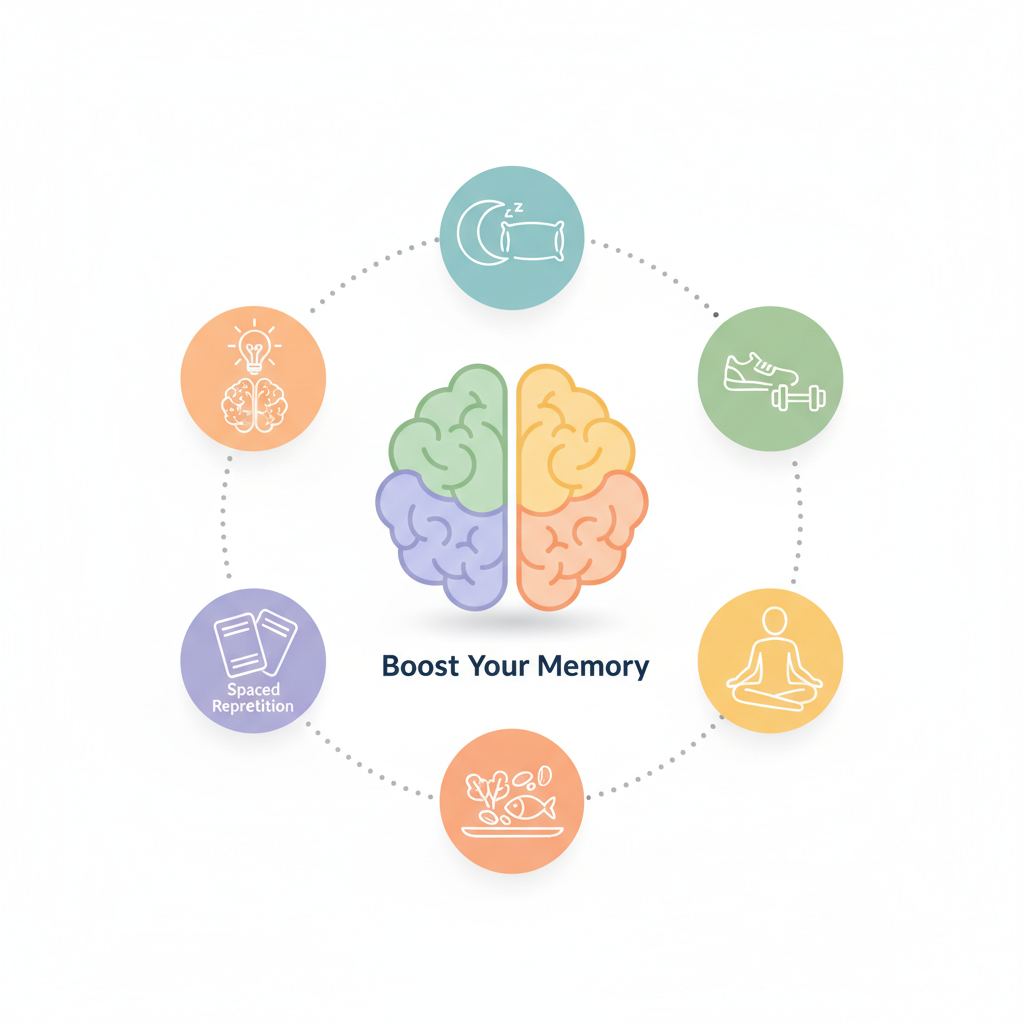
- Habit stacking—integrating sleep, exercise, stress management, diet, and learning strategies—yields the strongest long-term memory benefits.
Table of contents
- Understanding Memory: The Brain’s Superpower
- Lifestyle Habits That Protect and Support Memory
- Learning Techniques That Make Memory Work Better
- Everyday Habits to Protect Your Memory over Time
- A Simple and Powerful Memory Improvement Routine
- Important: No Magic Pill, But Powerful Habit Stacking
- Final Thoughts: Your Journey to a Better Memory Starts Now
Memory is one of the most amazing powers of the human brain. It allows us to learn new skills, remember important moments, and navigate daily life. But sometimes, it feels like our memory isn’t as sharp as we’d like. So, how can we improve memory and make our minds work better every day? This question excites scientists and learners alike, and the latest research gives us clear answers.
In this blog post, we will dive deep into the science-backed ways on how to improve memory by focusing on lifestyle habits and learning techniques. You’ll discover practical tips from top experts like Harvard Health, National Geographic, and peer-reviewed studies that show what really works to protect and boost your brain’s memory power. Get ready to unlock your mind’s potential!
Understanding Memory: The Brain’s Superpower
Memory is the brain’s ability to store and recall information. But it’s not just one process — it has many parts: short-term memory, long-term memory, and the process of consolidation (where the brain strengthens memories, often during sleep). Knowing this helps us understand why some habits boost memory and others hurt it.
Researchers divide effective memory improvement strategies into two big categories:
- Lifestyle Habits That Protect and Support Memory
- Learning Techniques That Help Encode and Recall Information
Lifestyle Habits That Protect and Support Memory
1. Get Enough Sleep: 7 to 9 Hours Every Night
Sleep is a superstar for memory. When you sleep, your brain isn’t just resting — it’s busy organizing and storing the information you learned during the day into your long-term memory. This process is called memory consolidation. Without enough sleep, the brain struggles to keep memories strong.
Studies across multiple sources, including National Geographic and Harvard Health, emphasize the crucial role of sleep. Adults should aim for 7–9 hours of quality sleep regularly to maximize brain function and memory retention.
“Sleep supports consolidation, meaning the brain reviews and stores what you learned into long-term memory.” — Source: National Geographic
2. Exercise Consistently: Move Your Body, Sharpen Your Mind
Exercise isn’t only about muscles and heart health—it’s about brain fitness too! Aerobic exercises like walking, running, and swimming improve blood flow to the brain, fueling it with oxygen and nutrients. Strength training adds further benefits by encouraging brain growth and nerve connections.
Research published in PMC NIH and echoed by Harvard Medical School shows that people who exercise regularly tend to have better memory and cognitive function.
Relatedly, the blog post on Effective Context Engineering for AI Agents explores how managing complex information loads can parallel improving cognitive function through exercise to enhance focus.
3. Manage Stress: Calm Your Mind for Better Recall
Stress is one of memory’s biggest enemies. When you feel stressed, your brain releases hormones that can interfere with memory formation and retrieval. Over time, high stress can even shrink areas of the brain involved in learning.
Practices like meditation, mindfulness, deep breathing, and yoga can reduce stress and protect your memory. According to Harvard Health and Medical News Today, stress control is linked to better brain health and memory performance.
4. Eat a Brain-Healthy Diet: Feed Your Memory Right
Your brain needs the right fuel to function well. Diets rich in leafy green vegetables, berries, nuts, fish (especially fatty fish with omega-3 fatty acids), and olive oil give your brain the nutrients to stay sharp. These foods have antioxidants and healthy fats that reduce inflammation and support brain cells.
The Times of India and Harvard Health confirm that eating this way slows cognitive decline and boosts memory.
For further inspiration on healthy habits, check the blog on Essential Health Tips: Your Complete Guide to a Healthier Life in 2024, which complements memory-supporting lifestyle changes.
5. Stay Socially and Mentally Active
Your brain loves being challenged! Staying socially connected and mentally engaged by volunteering, pursuing hobbies, or learning new skills keeps your brain networks strong. This social and cognitive stimulation supports lifelong memory health.
Harvard highlights that mental and social activities are key lifestyle factors that protect memory as we age (source).
6. Avoid Smoking and Limit Alcohol
Smoking damages brain cells and blood vessels, increasing risk of memory problems. Excessive alcohol affects brain structure and function. Avoiding smoking and drinking moderately protects your cognitive health (Harvard Health).
7. Control Health Conditions
High blood pressure, cholesterol, and blood sugar levels can harm your brain over time. Managing these with lifestyle and medication helps maintain memory function as reported by Harvard Health.
8. Use External Supports to Reduce Brain Load
Sometimes, using to-do lists, calendars, or designated spots for important items (like keys) can free your mind from remembering trivial things, lowering cognitive load and improving focus on important memories (Harvard Health).
9. Avoid Distractions and Multitasking
Trying to remember or learn something while multitasking is less effective. Focused attention boosts encoding (storing information), which improves recall later (National Geographic).
Learning Techniques That Make Memory Work Better
Beyond lifestyle, how you study or learn plays a huge role in improving memory. Let’s explore proven techniques.
1. Spaced Repetition: Spread Out Your Review Sessions
Spaced repetition means reviewing information repeatedly over increasing intervals. This technique is more powerful than cramming because it strengthens memory through repeated retrieval.
Scientists from sources like PMC NIH and Science Focus say spaced review helps you remember longer and with less effort.
2. Active Recall: Test Yourself Often
Rather than just rereading notes, actively try to recall the information. Quizzing yourself or struggling to remember before checking the answer dramatically improves memory. This is supported by National Geographic and Harvard Health.
3. Use the Method of Loci (Memory Palace)
This ancient technique involves imagining a familiar place and mentally placing the things to remember along a route or in specific locations. It builds vivid mental associations that boost recall.
According to BBC and Harvard Health, the memory palace technique is highly effective.
4. Chunking: Group Information into Meaningful Units
Our brains find it easier to remember groups or “chunks” of information rather than random bits. For example, breaking a phone number into parts is chunking.
Harvard Health identifies chunking as an important memory aid (source).
5. Imagery and Association
Turning facts into vivid mental pictures or linking new information to what you already know makes memories stickier.
This approach is supported by multiple sources, including BBC and Science Focus.
6. Elaborative Rehearsal: Connect New to Known
Instead of rote repetition, connecting new knowledge to existing ideas helps deeper understanding and better memory. For example, relating new vocabulary words to familiar images or stories enhances learning (Harvard Health).
7. Read Aloud, Repeat, and Paraphrase
Saying information out loud, repeating it, or putting it into your own words strengthens encoding. Times of India and Harvard Health confirm these effective study habits.
8. Use Multiple Senses While Learning
Learning with more than one sense — such as combining reading with hearing, or drawing images — can improve recall. Multisensory input builds stronger brain connections (Times of India).
For techniques on improving study habits and effective learning, see also Principles of Building AI Agents PDF, which discuss structured approaches to knowledge retention valuable even beyond AI.
Everyday Habits to Protect Your Memory over Time
Improving memory is not just about learning better but also about protecting the brain’s health day to day. Here are some practical habits to adopt:
- – Avoid smoking and limit alcohol intake (Harvard Health).
- – Control blood pressure, cholesterol, and blood sugar (Harvard Health).
- – Treat hearing loss and other health issues that impact cognition.
- – Avoid distraction and don’t multitask when you need to remember important info.
- – Use external tools like to-do lists and calendars to reduce mental clutter.
A Simple and Powerful Memory Improvement Routine
To combine these tips into practice, here’s a simple memory improvement routine backed by science:
- Learn the material once — focus attention fully.
- Quiz yourself immediately — test what you remember without notes.
- Review again after a delay — spaced repetition starts here.
- Repeat testing after longer intervals — this strengthens retention.
This method combines active recall and spaced repetition, considered two of the best techniques for improving memory efficiency (National Geographic, Science Focus).
Important: No Magic Pill, But Powerful Habit Stacking
Despite many claims, no single supplement, pill, or quick trick can magically transform memory on its own (PMC NIH, Harvard Health). Instead, the best results come from stacking habits:
- Regular, restful sleep.
- Consistent exercise.
- Good stress management.
- Brain-healthy diet.
- Active learning techniques like self-testing and spaced review.
Together, these habits create a powerful foundation for long-term memory health and sharpness.
Brain-training games can help somewhat but evidence strongly favors real-world learning, physical activity, and sleep (USA.edu, Science News Today, Harvard Health).
Final Thoughts: Your Journey to a Better Memory Starts Now
Memory affects every part of our lives—from school to work to relationships. Knowing how to improve memory is like unlocking a secret power within you. The science is clear: focus on your lifestyle and learning strategies simultaneously.
Start by prioritizing sleep and exercise, reduce stress, eat well, and engage socially. Then, when learning new things, use active recall, spaced repetition, and memory techniques like the method of loci or chunking. Avoid distractions and use external tools to keep your mind clear.
By stacking these thoughtful habits, you can protect your brain today and sharpen your memory for years to come. So why wait? Begin your memory makeover now and let your brain amaze you every day!
Sources:
- https://pmc.ncbi.nlm.nih.gov/articles/PMC3527655/
- https://www.nationalgeographic.com/health/article/how-to-improve-memory
- https://www.health.harvard.edu/topics/memory
- https://www.sciencefocus.com/wellbeing/6-ways-protect-improve-memory
- https://timesofindia.indiatimes.com/life-style/health-fitness/web-stories/10-scientifically-proven-ways-to-sharpen-memory/photostory/121271077.cms
- https://www.medicalnewstoday.com/articles/326068
- https://www.bbc.com/news/science-environment-39194495
- https://timesofindia.indiatimes.com/education/news/six-study-habits-that-boost-memory-backed-by-cognitive-science/articleshow/123761099.cms
- https://www.usa.edu/blog/science-backed-memory-tips/
- https://www.sciencenewstoday.org/10-science-backed-ways-to-boost-your-memory
Unlock your brain’s potential and take charge of your memory today!
}