Agentic AI Foundation: What to Expect from a Standardized AI Agent Development Era
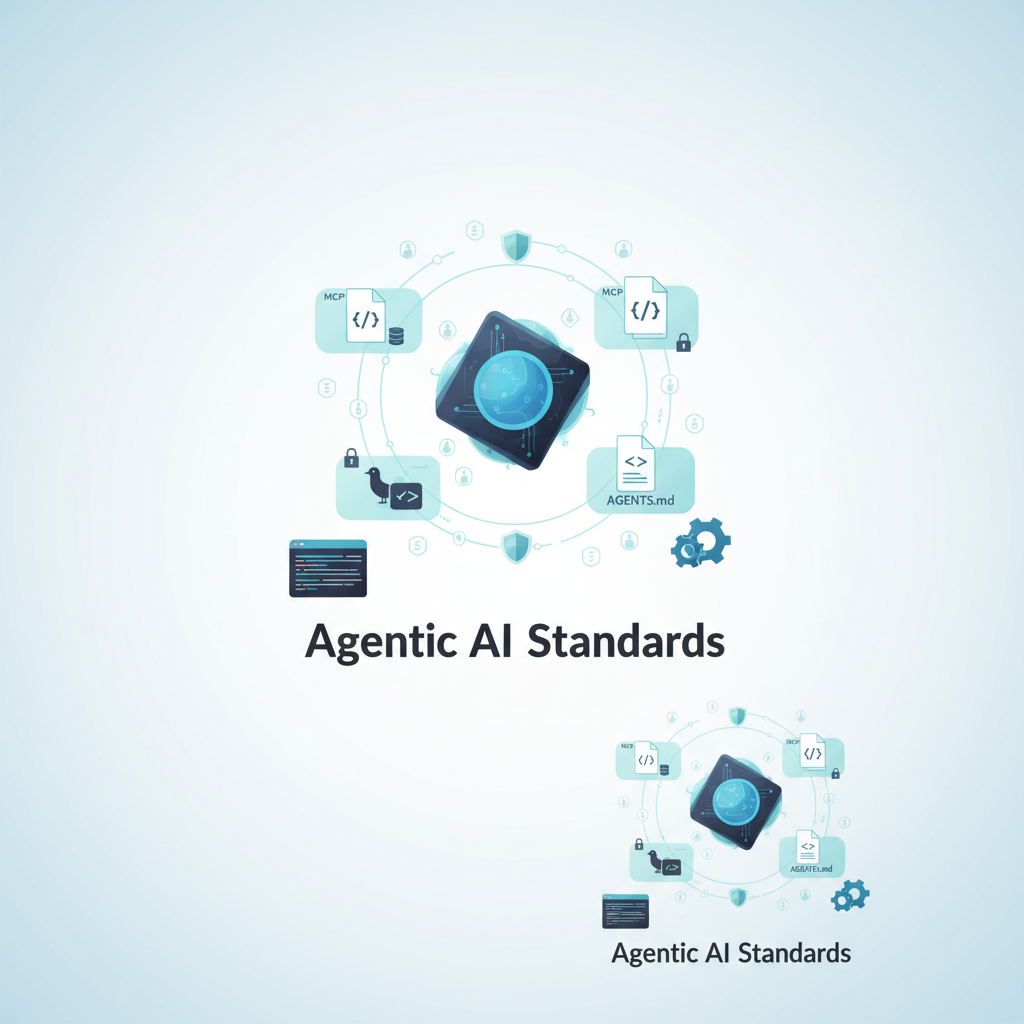
The Agentic AI Foundation: A New Era of Standardized AI Agent Development
Estimated reading time: 6 minutes
Key Takeaways
- AAIF is a landmark coalition for AI’s future, bringing together major players to standardize agentic AI infrastructure.
- Open infrastructure & standards for agent communication and governance aim to reduce fragmentation and vendor lock-in.
- Founding projects include MCP, Block’s goose framework, and OpenAI’s AGENTS.md specification to enable interoperability.
- For developers, enterprises, and the AI industry, AAIF promises standardized tools, governance, and reduced risk of vendor lock-in.
Table of contents
- A Landmark Coalition for AI’s Future
- The Core Mission: Building an Open AI Infrastructure
- Three Pillars of Innovation: AAIF’s Founding Projects
- Why AAIF Matters: The Impact on AI Development
- The Power of Collaboration: AAIF’s Member Organizations
- Looking Ahead: The Future of Agentic AI
- Getting Involved with AAIF
- Conclusion
The Agentic AI Foundation (AAIF) has emerged as a groundbreaking initiative that promises to revolutionize how AI agents are developed, deployed, and governed. Launched in December 2025 under the Linux Foundation’s umbrella, this vendor-neutral organization is set to standardize key technologies for agentic AI – systems that function as autonomous software agents.
A Landmark Coalition for AI’s Future
The formation of AAIF marks a pivotal moment in artificial intelligence history, bringing together tech giants like Amazon Web Services, Google, Microsoft, OpenAI, and Anthropic under one unified mission: creating open, standardized infrastructure for AI agents that can think, plan, and act autonomously.
What makes this initiative particularly exciting is its potential to transform how AI agents operate across different platforms and services. Through three flagship projects – Anthropic’s Model Context Protocol (MCP), Block’s goose framework, and OpenAI’s AGENTS.md specification – AAIF is laying the groundwork for a more interconnected and standardized AI future.
The Core Mission: Building an Open AI Infrastructure
The Linux Foundation’s announcement (https://www.linuxfoundation.org/press/linux-foundation-announces-the-formation-of-the-agentic-ai-foundation) outlines AAIF’s ambitious goals:
- Creating open infrastructure for agentic AI development
- Establishing neutral governance structures
- Promoting open standards for agent communication
- Ensuring transparency and safety in AI development
- Preventing vendor lock-in and ecosystem fragmentation
These objectives reflect a broader vision: transforming AI agent development from a proprietary, siloed approach to an open, collaborative ecosystem where innovation can flourish freely. For more insights on how avoiding vendor lock-in leads to stronger ecosystems, see vendor lock-in and ecosystem benefits.
Three Pillars of Innovation: AAIF’s Founding Projects
1. The Model Context Protocol (MCP)
Anthropic’s contribution, the Model Context Protocol, serves as a universal language for AI agents to communicate with tools, data sources, and services. This standardized protocol eliminates the need for custom integrations between different AI systems, making it easier for developers to create interoperable AI solutions. This concept aligns with the principles explained in https://anilbohra.me/principles-building-ai-agents-pdf, which dives into workflows and best practices for building AI agents.
2. Block’s goose Framework
The goose framework, contributed by Block (formerly Square), provides the essential infrastructure for building and orchestrating AI agents. This open-source tool gives developers a solid foundation for creating autonomous AI systems that can work together seamlessly. For a comprehensive guide to orchestrating AI workflows and building smarter AI systems, refer to https://anilbohra.me/effective-context-engineering-ai-agents.
3. OpenAI’s AGENTS.md
This specification creates a standardized format for describing AI agents’ capabilities, tools, policies, and behaviors. Think of it as a universal “resume” for AI agents, making it easier to understand what each agent can do and how it can be integrated into larger systems. The importance of agent specifications and design patterns is further explored in https://anilbohra.me/patterns-building-ai-agents-book.
Why AAIF Matters: The Impact on AI Development
For Developers
- Access to standardized tools and protocols
- Reduced development time and complexity
- Greater interoperability between different AI systems
- Clear guidelines for creating secure, reliable AI agents as outlined in principles-building-ai-agents-pdf
For Enterprises
- Lower risk of vendor lock-in explained in vendor lock-in explanations
- More predictable development pathways
- Enhanced security and governance frameworks
- Easier integration of AI systems across platforms
For the AI Industry
- Accelerated innovation through shared standards
- Improved safety and transparency
- More efficient collaboration between organizations
- Reduced fragmentation in the AI ecosystem
The Power of Collaboration: AAIF’s Member Organizations
The foundation’s platinum members represent a who’s who of tech industry leaders:
- Amazon Web Services (AWS)
- Anthropic
- Block
- Bloomberg
- Cloudflare
- Microsoft
- OpenAI
This diverse coalition ensures that AAIF’s standards will be widely adopted and implemented across the industry, creating a truly universal framework for AI agent development. The collaborative nature of the AI agent ecosystem is similar to open projects like OpenAI’s agent frameworks discussed in https://anilbohra.me/open-ai-agent-kit.
Looking Ahead: The Future of Agentic AI
AAIF’s establishment comes at a crucial time in AI development. As autonomous AI agents become more prevalent in business and technology, the need for standardized protocols and safety measures becomes increasingly critical.
The foundation’s work will help ensure that as AI agents become more sophisticated, they remain:
– Interoperable across different platforms
– Secure and controllable, as discussed in https://anilbohra.me/best-ai-agents-2025-guide
– Transparent in their operations
– Aligned with public interest
– Accessible to developers of all sizes
Getting Involved with AAIF
For those interested in contributing to this groundbreaking initiative, AAIF maintains an open community through their website (https://aaif.io) and GitHub organization. Developers, researchers, and organizations can participate in shaping the future of agentic AI through:
- Contributing to technical specifications
- Participating in working groups
- Implementing AAIF standards in their projects
- Providing feedback on proposed standards
For more on engaging with AI agent communities and collaborative development, see https://anilbohra.me/effective-context-engineering-ai-agents.
Conclusion
The Agentic AI Foundation represents a watershed moment in artificial intelligence development. By bringing together industry leaders and establishing open standards for AI agent development, AAIF is paving the way for a more collaborative, secure, and innovative AI future. As these standards evolve and mature, we can expect to see accelerated development of AI agents that can work together seamlessly, safely, and effectively across platforms and use cases.
The foundation’s work promises to democratize access to advanced AI capabilities while ensuring that development proceeds in a way that benefits the entire technology ecosystem. As we move forward, AAIF’s role in shaping the future of AI agents will likely prove instrumental in realizing the full potential of artificial intelligence. For foundational concepts in building AI agents, see https://anilbohra.me/principles-building-ai-agents-pdf and for how memory functions within agentic AI systems, check https://anilbohra.me/memory-agentic-ai-role.
Internal Links Added:
- https://anilbohra.me/https-anilbohra-me-automation-for-e-commerce-business/
- https://anilbohra.me/principles-building-ai-agents-pdf
- https://anilbohra.me/effective-context-engineering-ai-agents
- https://anilbohra.me/patterns-building-ai-agents-book
- https://anilbohra.me/open-ai-agent-kit
- https://anilbohra.me/best-ai-agents-2025-guide
- https://anilbohra.me/effective-context-engineering-ai-agents
- https://anilbohra.me/memory-agentic-ai-role
}