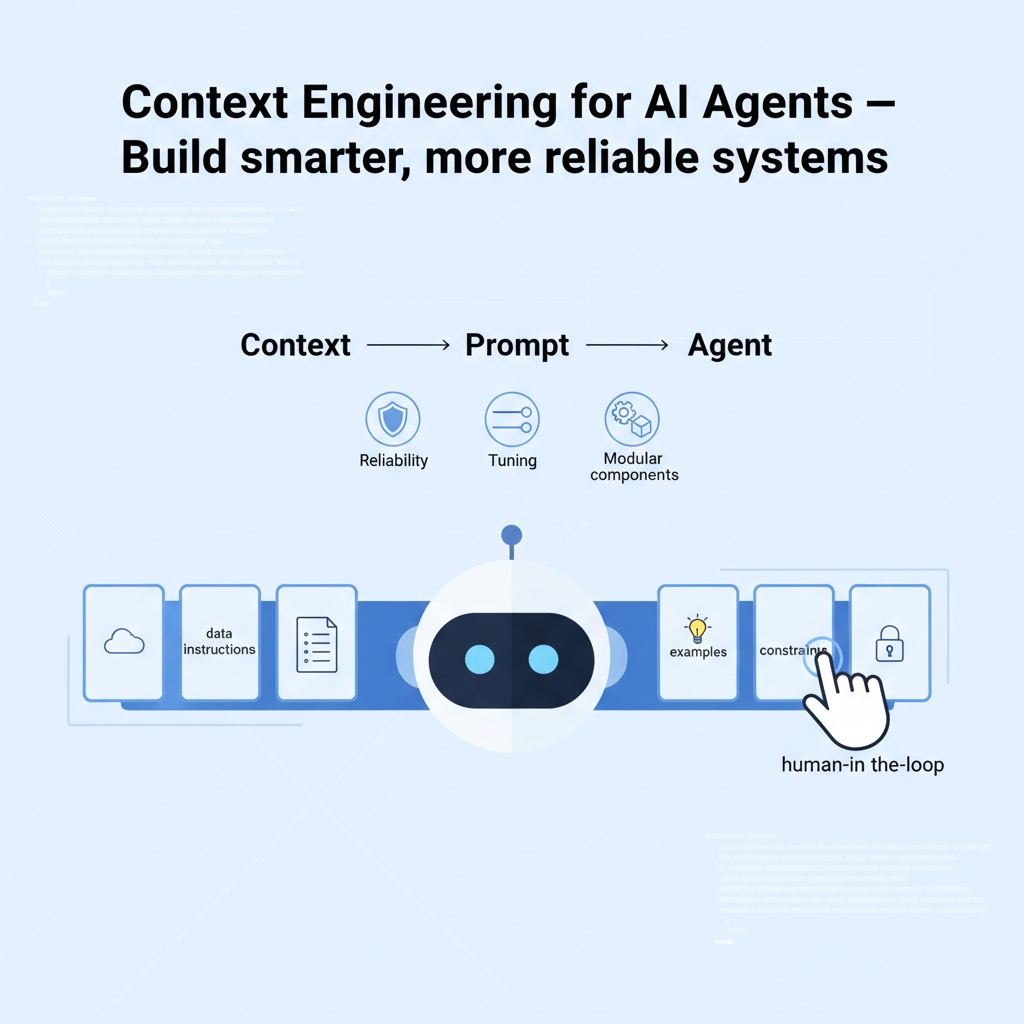
Effective Context Engineering for AI Agents: The Ultimate Guide to Building Smarter AI Systems
Estimated reading time: 8 minutes
Key Takeaways
- Context engineering designs comprehensive information environments that empower AI agents to perform tasks reliably and accurately.
- It takes a holistic approach to managing information, going beyond crafting single instructions (prompt engineering).
- Key components include:
- Conversation History & User State
- External Information Retrieval
- Tool Descriptions
- Structured Output Schemas
- Best practices emphasize providing minimal sufficient context, smart retrieval, robust schemas, persistent memory, and feedback loops.
- Understanding challenges like context window limits, dynamic task management, and relevance determination is crucial for robust systems.
Table of contents
What is Context Engineering?
Context engineering is the art and science of designing comprehensive information environments that enable AI agents to perform complex tasks accurately and reliably. Unlike prompt engineering, which focuses on crafting specific instructions, context engineering takes a holistic approach to managing all the information an AI agent needs to function effectively.
Think of it as the difference between giving someone directions (prompt engineering) and ensuring they have a complete map, compass, and environmental awareness (context engineering). The latter approach creates a more robust foundation for success.
Context Engineering vs. Prompt Engineering: Understanding the Difference
Prompt Engineering:
- Focuses on specific instructions
- Operates on a single-call basis
- Aims to clarify expected output
Context Engineering:
- Manages entire information ecosystems
- Handles multi-step, multi-source workflows
- Ensures the right environment for successful task completion
Best Practices for Effective Context Engineering
- Implement Minimal Sufficient Context – Provide just enough context; avoid overload to prevent inefficiencies.
- Utilize Smart Search and Chunking – Semantic, hybrid search and smart chunking improve relevance.
- Design Robust Schemas and Templates – Use structured formats to guide responses.
- Maintain Persistent Memory – Support short-term and long-term memory for continuity.
- Incorporate Feedback Loops – Regular feedback from users and logs helps improve context strategies over time.
Tackling Key Challenges
- Context Window Limitations – Finite context windows require careful content prioritization.
- Dynamic Task Management – Tasks evolve, requiring flexible, real-time adaptation.
- Relevance Determination – Pinpoint truly relevant context with domain expertise and calibration.
Technical Implementation Strategies
- Vector Search Databases – Embedding-based representations for efficient semantic search and retrieval.
- Context Orchestration Frameworks – Use LangChain or LlamaIndex for context construction, memory management, and agent workflow.
- External Tool Integration – Systematically incorporate APIs and business logic.
The Future of Context Engineering
As AI continues to evolve, context engineering is becoming increasingly crucial for building reliable and effective AI systems. Industry experts emphasize that context engineering will be fundamental to the next generation of AI applications, particularly in regulated industries like finance and healthcare.
Conclusion
Effective context engineering is not just about providing information to AI agents – it’s about creating intelligent, adaptive systems that can understand and utilize information effectively. By following the principles and practices outlined in this guide, developers and AI engineers can create more robust, reliable, and effective AI agents that better serve their intended purposes. The future of AI lies not just in better models, but in better context engineering that allows these models to reach their full potential.
Frequently Asked Questions
Is Devin AI going to replace human developers?
While Devin can automate many routine coding tasks, it currently lacks the creative problem-solving, business understanding, and strategic thinking that senior developers provide. It’s more likely to augment human capabilities rather than replace them entirely.
How much does Devin AI cost?
Pricing details vary depending on usage levels and enterprise requirements. Contact Cognition Labs for current pricing information and enterprise packages.
What programming languages does Devin support?
Devin supports major programming languages including Python, JavaScript, Java, C++, and Go. Support for additional languages is continuously being expanded based on user demand.
Can Devin work with existing codebases?
Yes, Devin can analyze and work with existing codebases, though performance varies depending on code quality, documentation, and complexity. It works best with well-structured, documented projects.
Is Devin suitable for enterprise-level development?
Devin shows promise for enterprise use, particularly for routine development tasks and maintenance work. However, enterprises should carefully evaluate their specific needs and conduct thorough testing before full implementation.
How does Devin compare to other AI coding assistants?
Unlike tools like GitHub Copilot or ChatGPT, Devin claims full autonomy in software development. While other tools assist developers, Devin aims to function as an independent software engineering team member.