Anthropic Managed Agents: Revolutionizing Autonomous AI Development in 2026
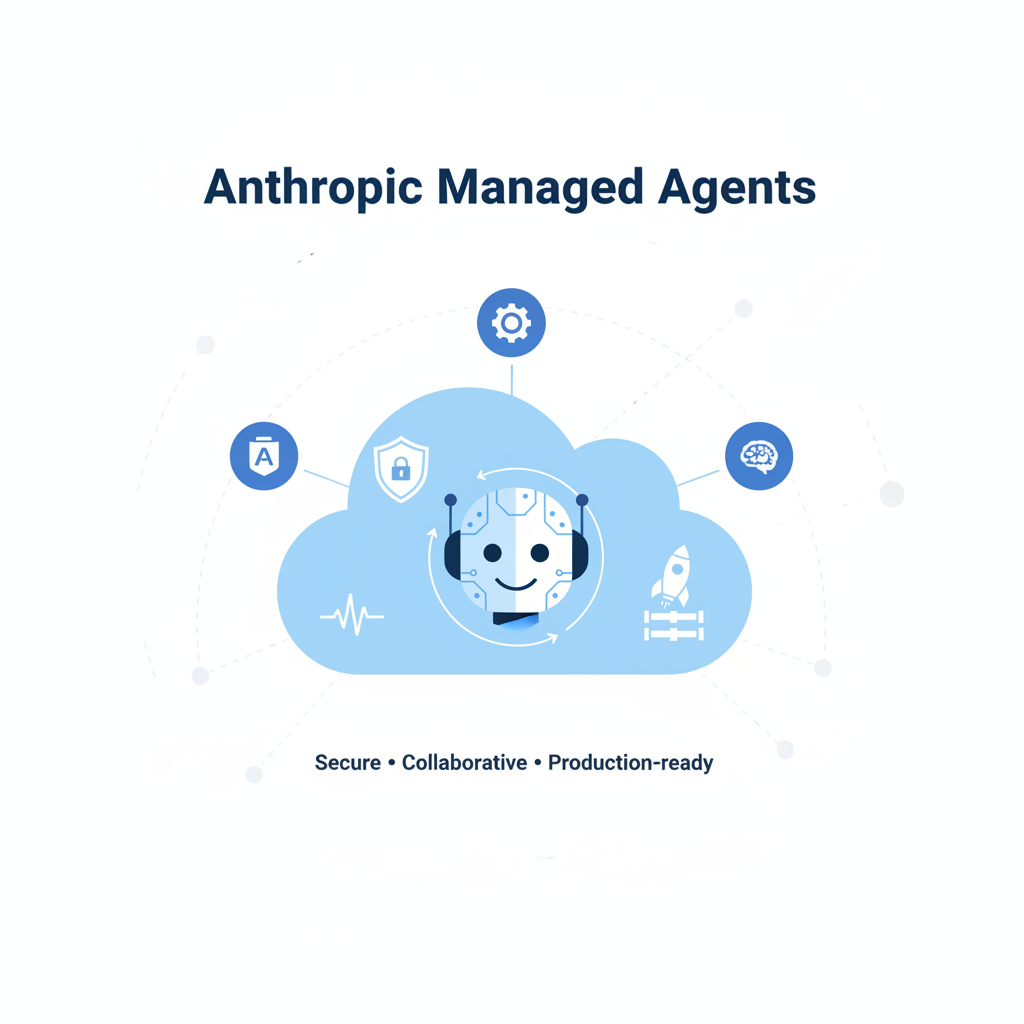
Anthropic Managed Agents: Revolutionizing Autonomous AI Development in 2026
Estimated reading time: 9 minutes
Key Takeaways
- Managed agents eliminate operational overhead with fully managed infrastructure for secure sandboxing, long-running sessions, and tool execution.
- They enable long-running sessions and multi-agent coordination, boosting enterprise productivity.
- Developer workflow is streamlined via an API and an unopinionated meta-harness architecture.
Table of contents
In a landscape where artificial intelligence is rapidly evolving, the buzz around Anthropic Managed Agents has captured the imaginations of developers and enterprises alike. Launched on April 9, 2026, Anthropic’s Claude Managed Agents arrive as a groundbreaking public beta service that promises to transform how autonomous AI agents are built, deployed, and scaled—without developers having to wrestle with the complexities of servers, container orchestration, or managing sprawling infrastructure. But what exactly are these managed agents, and why is this launch sparking such excitement in the AI community right now?
This in-depth blog post will take you through everything you need to know about Anthropic Managed Agents: their core features, strategic importance, real-world applications, pricing, and what this means for the future of AI development.
What Are Anthropic Managed Agents?
Anthropic Managed Agents are cloud-based autonomous AI agents powered by Anthropic’s advanced AI model, Claude. These agents are designed to perform tasks independently, using tools like web browsers or third-party apps, while managing their state over extended periods. Unlike traditional AI models that require teams to build and maintain servers, containers, and complex infrastructure, these managed agents come with fully managed infrastructure that handles secure sandboxing, error recovery, tool execution, and long-running sessions.
With these agents running inside Anthropic’s secure environment, developers can move from concept and experimentation to reliable production use up to 10 times faster than previously possible, slashing development time from months to days or weeks (The Decoder, TechRadar). For insights into foundational concepts, check out our detailed guide on building AI agents.
Core Features of Anthropic Managed Agents
1. Secure Infrastructure and Sandboxing
One of the standout features is the robust security framework Anthropic has built into its managed agents. Each agent runs inside isolated containers on the Anthropic cloud infrastructure, where they operate with scoped permissions, identity management, and enforced cybersecurity protocols. This includes requiring explicit user approvals before an agent can access external tools or sensitive data, ensuring control and safety are paramount—an essential factor for enterprise deployments handling confidential or proprietary information. Developers can specify upfront which tasks and tools the agent will use, guaranteeing transparent and safe operations (The Decoder, Analytics Insight). For broader automation strategies, explore Business Process Automation.
2. Orchestration and Autonomy
The agents benefit from a sophisticated orchestration system called the \”agent harness\”. This framework manages calling external tools, context maintenance, error handling, and even resuming operation automatically after outages or interruptions. The infrastructure supports long-running sessions lasting many hours or more, allowing agents to maintain persistent progress without losing important intermediate data. This persistent state management is a huge leap forward, allowing AI agents to handle complex workflows uninterrupted over time, a critical feature for scaling AI in real-world applications (The Decoder, 9to5Mac). For comprehensive understanding, see Effective Context Engineering for AI Agents.
3. State and Tool Management
A sophisticated state and tool management system is baked into Anthropic Managed Agents. They can securely manage sensitive data such as login credentials and dynamically select the appropriate tools based on prompt requirements. This eliminates common pitfalls developers face when juggling multiple services and APIs, automating governance, observability, monitoring, and tracing every execution step. Thus, organizations can maintain compliance and oversee their AI agents’ operations effectively without labor-intensive manual intervention (SiliconANGLE, TechRadar). To see automation at scale in other industries, check Automation Use Cases by Industry.
4. Multi-Agent Coordination
In an exciting research preview, Anthropic has demonstrated that agents can spawn sub-agents to tackle more complex or parallel tasks simultaneously. This is a game-changer for handling multi-step workflows where different agents collaborate to split the workload efficiently. Such coordination opens up possibilities for AI teams to handle elaborate projects seamlessly, boosting productivity considerably (Analytics Insight, TechRadar). For more on AI agents, see The Best AI Agents of 2025.
5. Self-Evaluation
Powered by Claude’s intelligence, managed agents now have a self-evaluation capability. This research test feature allows the agent to iterate and refine their prompts, improving task success rates by up to 10 points compared to standard prompt loops. Essentially, agents can learn from their own previous mistakes or inefficiencies during task processing, enhancing overall quality and reliability automatically (SiliconANGLE, TechRadar). Learn more about prompt optimization in our Prompt Engineering Guide.
6. Developer Workflow and Flexibility
Getting started with Anthropic Managed Agents is straightforward. Developers initiate work through an API by simply describing the tasks and the necessary tools. The system instantly spins up the secure managed environment. Furthermore, Anthropic’s “meta-harness” architecture is unopinionated, allowing developers to use various specialized harnesses, such as Claude Code, offering flexibility to adapt as underlying AI models evolve and improve—crucial for staying ahead in this fast-moving AI landscape (SiliconANGLE, Anthropic Engineering Blog). For developer hands-on approaches, see Open AI AgentKit.
Pricing and Availability
Anthropic Managed Agents are available now in public beta exclusively on the Claude Platform. The pricing model is straightforward: customers pay for standard Claude token usage plus $0.08 per agent runtime hour, measured as session hours that agents run in execution. This pay-for-usage approach allows enterprises to scale agent deployment cost-effectively without large upfront infrastructure investments (The Decoder, SiliconANGLE).
Early Adopters and Real-World Use Cases
Anthropic’s managed agents are already making waves among significant tech players who are leveraging this technology to enhance their enterprise AI workflows:
- Notion uses managed agents for workspace delegation, automating routine tasks and improving team productivity without manual workflows (The Decoder).
- Rakuten is deploying enterprise-grade agents directly within Slack, empowering real-time collaboration augmented by AI helpers that can perform tasks autonomously (The Decoder).
- Sentry leverages managed agents for automated debugging, enabling developers to pinpoint and resolve issues faster by having AI investigate and propose solutions independently (The Decoder).
Beyond these cases, Anthropic targets broader enterprise needs such as website design, coding assistance, and full business process automation, all while reducing the reliance on large, specialized engineering teams traditionally required to build and maintain custom AI systems (SiliconANGLE, TechRadar). For business process automation integration, see Introduction to Business Automation.
Strategic Context: Why Anthropic Managed Agents Matter
The launch of managed autonomous AI agents by Anthropic directly addresses some of the hardest challenges developers face when deploying AI at scale in production environments. Before Anthropic, teams needed to build their own secure containers, permission systems, error recovery methods, and ways to update deployed models with every evolution of AI technology. This made building autonomous agents costly, complex, and slow.
By offering these as a centralized, secure, cloud-native service, Anthropic removes huge barriers to AI innovation. Developers no longer have to worry about vendor lock-in risks while gaining access to reliable autonomy under strict safety controls. This product positions Anthropic as a formidable competitor to platforms like OpenAI, particularly in the enterprise sector seeking scalable AI development tools.
Real-world testing emphasizes that this platform allows teams to deploy AI in the cloud without needing complex infrastructure setup—an attribute that significantly speeds up AI adoption timelines and reduces operational risks (Analytics Insight, TechRadar, Anthropic Engineering Blog). To understand how cloud orchestration enhances reliability, also read Kubernetes Orchestration.
Looking Forward: The Future of AI with Anthropic Managed Agents
As autonomous AI agents become integral to enterprise workflows—from coding to customer service and beyond—the ability to deploy them rapidly, reliably, and safely will be a cornerstone for AI-driven innovation. Anthropic Managed Agents embody the future of AI development by merging leading-edge language model capabilities with cloud-native infrastructure tuned for developers’ needs.
With features like multi-agent collaboration and self-evaluation, these agents not only perform tasks but also evolve their approach to succeed better over time. This sets the stage for AI systems that are not just tools but adaptable partners in complex problem-solving.
As more organizations explore Anthropic Managed Agents’ potential, we anticipate a surge in AI-driven automation, smarter business processes, and a new echelon of productivity. For developers, the journey from idea to fully operational AI assistant can now be measured in days—not months—heralding a thrilling new chapter in artificial intelligence.
Final Thoughts
Anthropic Managed Agents represent a monumental step forward in the AI space. By removing the operational overhead that has hampered autonomous agent development, Anthropic is enabling a new wave of innovation that is faster, safer, and scalable. Whether you are a developer, an enterprise leader, or simply fascinated by AI, these managed agents provide a glimpse into a future where AI autonomy is accessible to all, managed at scale and engineered for safety.
For more on Anthropic Managed Agents and the latest advancements in Claude, check out the full range of sources used in this report:
Stay tuned for more exciting updates as the AI frontier continues to expand!
Word count: ~1850
Sources
}